
Reviewed · DUBLIN WALKING TOURS
Dublin Traditional Irish Music Walking Tour with Live Performance
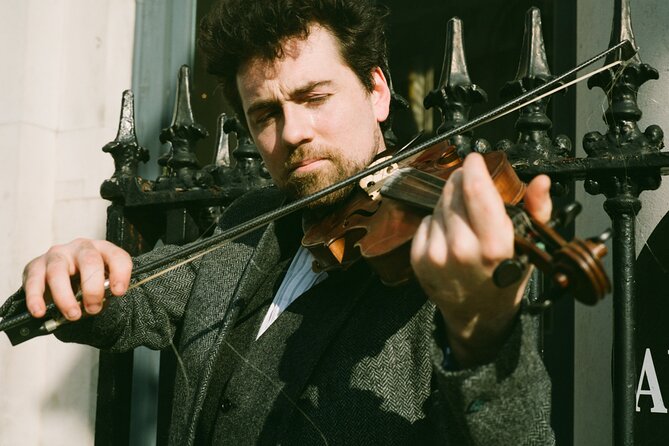
Dublin’s past comes into focus through its songs on this two-hour walk, led by an Irish musician rather than a guide who sticks to dates and names. At each stop, you hear stories tied to the place, then a traditional ballad or tune that gives those stories a human voice.
I like two things in particular: the route takes you through small central streets as well as past major landmarks, and the songs connect Dublin’s history with its people and politics. Guides such as Sean, Ciarán and Dylan have been praised for mixing music, humor and historical context.
One consideration: this is a live outdoor performance as well as a walking tour, so traffic noise and a group that spreads out can make it harder to hear. Arrive at the right meeting point, and stay close to the guide.
- Music is the method: Expect traditional songs to accompany stories about the places you visit.
- The route joins old streets and landmarks: Stops include Fishamble Street, Christ Church Cathedral and Dublin Castle.
- The guide performs: Guides have used guitar or mandolin, and may add poems, Gaelic songs or a singalong.
- The walk is short but lively: It lasts about two hours, with a maximum group size of 20.
- The finish is at St Patrick’s Cathedral: You end in St Patrick’s Park, beside the cathedral.
- Plan for the sound of the city: Outdoor music and street noise can compete, so keep near the guide.
Dublin’s story, sung along the way
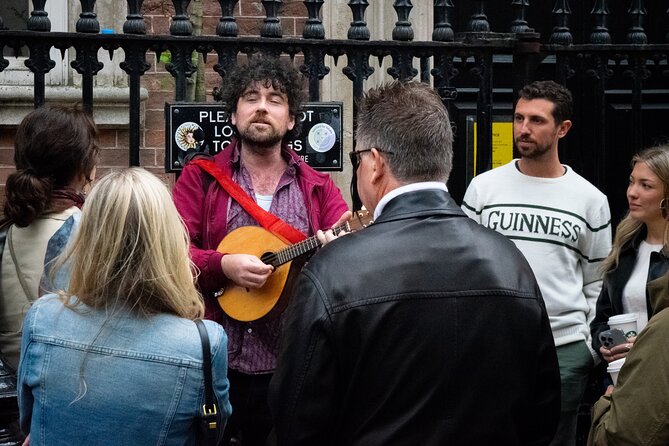
This is not a standard city walk with a few songs added for atmosphere. The music is part of how the guide tells the story: a song can carry a memory of a place, a community or a period in Irish life that a date on a plaque cannot.
That gives the tour a different pace from a lecture-heavy walk. You move between sites, hear a short account of their past, then stop for a performance. Some guides also bring in poetry, humor and audience participation. You may be invited to sing or dance, but the format is meant to be fun, not a test of your musical ability.
The best-known guides in the tour’s feedback include Sean, Ciarán and Dylan. Their performances have included guitar and mandolin, along with a mix of traditional songs, songs in Gaelic and occasional requests. You cannot count on a specific guide or set list, but the central idea stays the same: music and place are linked.
I see the value in that approach if you want more than a quick roll call of Dublin’s sights. Songs can open a window on the city’s social and political past, while the guide’s explanations help you understand what you are hearing. If you prefer a quiet walk with long stretches of detailed history, this format may feel too theatrical.
From Temple Bar into Dublin’s older streets
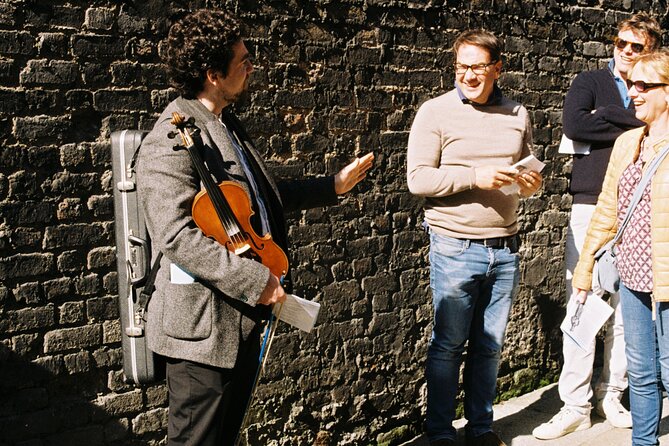
The meeting point is at 3 Crown Alley in Temple Bar, a central place to begin a walk through the city. The tour starts at 1:00 pm and finishes at St Patrick’s Cathedral, so you can plan the rest of your day around a route that crosses central Dublin rather than returning to its starting point.
Temple Bar is a busy area, and there have been occasional mix-ups when different walking tours meet nearby. Check that you have found the music tour and its guide before setting off. A late start has also been an issue on at least one outing, so arriving a little early gives you time to confirm you are with the right group.
The group limit is 20 people. That is small enough to make conversation and audience participation possible, but it is not a private tour. In a noisy street, a larger group can spread out and make it hard to hear. Stay close when the guide is speaking or playing, and ask if you miss a point.
More walking tours in Dublin:
- Dublin Highlights and Hidden Gems Guided Walking Tour
★ 5.0 · 6,020 reviews - Dublin: Highlights and Hidden Gems Walking Tour
★ 4.9 · 2,140 reviews - 1916 Rebellion Walking Tour
★ 5.0 · 1,605 reviews
Smock Alley Theatre and the Liffey
Smock Alley Theatre is the first listed stop. Founded in 1662, it is described as Ireland’s oldest theatre, and its setting in Temple Bar makes it a useful place to begin thinking about Dublin’s long relationship with performance. The stop lasts about 10 minutes, so expect a brief visit and story rather than a full theatre tour.
The next stop is Grattan Bridge, one of the picturesque crossings over the River Liffey. Seahorse lanterns mark the bridge, which connects Capel Street and Parliament Street. Here the city’s geography becomes part of the experience: the river divides and joins neighborhoods, while the bridge offers a quick visual pause between the narrower streets.
These stops help set the tone. You are not simply ticking off grand buildings; you are seeing how Dublin’s cultural life and city layout meet in everyday places. Still, the short timing means the guide has to keep moving. If you want to linger for photos or explore a site at length, you will need to return on your own.
Fishamble Street and the sound of Handel
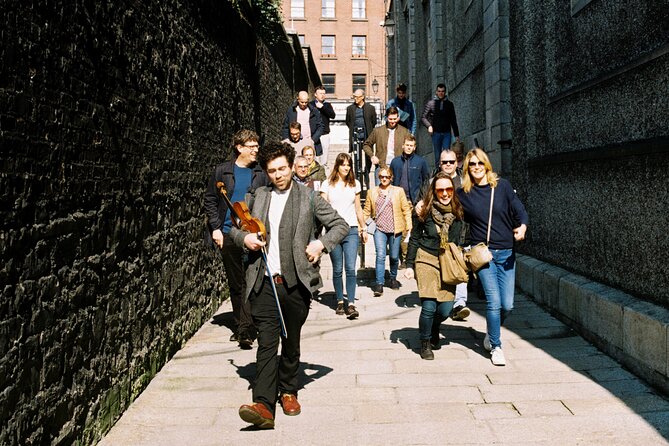
Fishamble Street is often described as Dublin’s oldest street. It was once home to a major Viking settlement outside Scandinavia, and it is also associated with the first performance of Handel’s Messiah. That pairing gives the stop a striking range, from early settlement to a landmark in musical history.
This is where the tour’s format makes particular sense. A story about a historic performance can lead naturally into a song, while the street itself connects the account to a real place rather than an abstract timeline. You may hear a traditional ballad or another piece chosen by the guide to fit the location.
The stop is listed at about 10 minutes. That is enough for a short story and a song, but not a deep study of Viking Dublin or Handel. Think of it as an introduction that gives you reasons to look closer, not a complete account of either subject.
Christ Church Cathedral and medieval Dublin
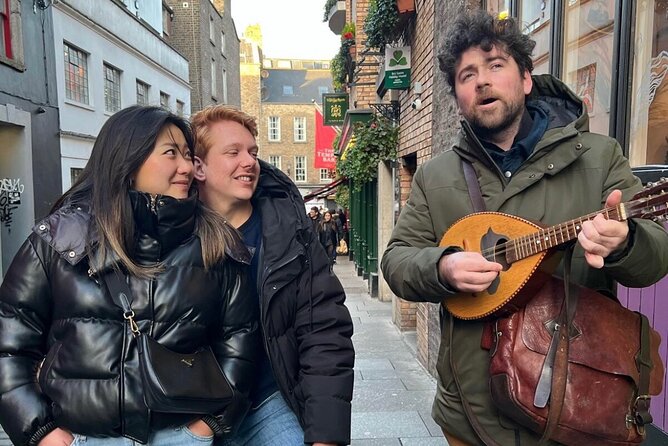
Christ Church Cathedral is one of the route’s major landmarks and a focal point for the story of medieval Dublin. Its architecture brings together medieval and Victorian elements, and the surrounding area helps explain how much the city has changed around its oldest center.
The guide uses the cathedral and its environs to tell darker stories through song. That can make this stop more atmospheric than a standard architectural description, with music setting the mood while the guide explains the place’s past. The listed visit is around 10 minutes, so the focus is on a short interpretation rather than an extended cathedral visit.
Do not assume that the tour includes a full interior visit. The stop is listed with free admission, but the experience is a walking tour and the description does not promise a separate cathedral entry. If seeing the interior matters to you, check the cathedral’s own visiting arrangements before or after the walk.
More Dublin tours:
- Dublin to Cliffs of Moher, including Wild Atlantic Way and Galway
★ 5.0 · 23,331 reviews - From Dublin: Cliffs of Moher, Burren & Galway City Day Tour
★ 4.8 · 18,888 reviews - Dublin: Guinness Storehouse Entry Ticket
★ 4.6 · 16,863 reviews - Dublin to Cliffs of Moher, Burren, Wild Atlantic Way, Galway Tour
★ 5.0 · 12,924 reviews
Dublin Castle’s Ship Street Gate
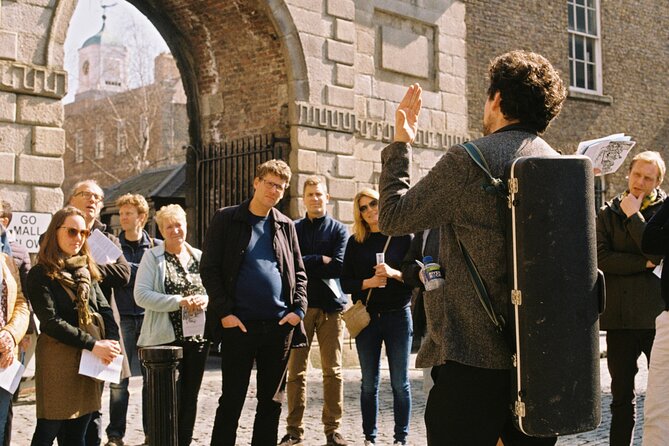
At Dublin Castle, the group swings by the Ship Street Gate and some well-known steps. This is a brief stop, but it adds a different kind of landmark to a route otherwise built around streets, churches and performance venues.
The guide’s song-and-story approach is useful here because a castle can easily become just another photo stop. A short explanation gives you a sense of why the site matters, while the music connects the place to the wider story of the city. You should not expect a full tour of Dublin Castle’s buildings or grounds on this walk.
Bring your camera if you like, but keep it ready rather than expecting long pauses. The route is designed to keep moving, and the guide’s performance is part of the visit. Taking a few quick photos and then listening will give you more from this stop than trying to document every detail.
Ending in St Patrick’s Park
The walk finishes at St Patrick’s Park, beside St Patrick’s Cathedral. Ending here gives the route a clear final landmark and leaves you near one of Dublin’s most important religious buildings. The park also offers a calmer place to pause after the music and movement of central streets.
The tour does not list a separate cathedral admission ticket, so treat the finish as a chance to see the exterior and surroundings unless you have confirmed access to the interior. The end point is useful for continuing your day, too: you can stay in the area to explore further or make your way elsewhere in the city.
Some walks include a final song or an interactive moment, but that depends on the guide and the group. Audience participation is part of the tour’s character, not a requirement. You can join in if it suits you, or simply listen.
What the music adds, and where it can fall short
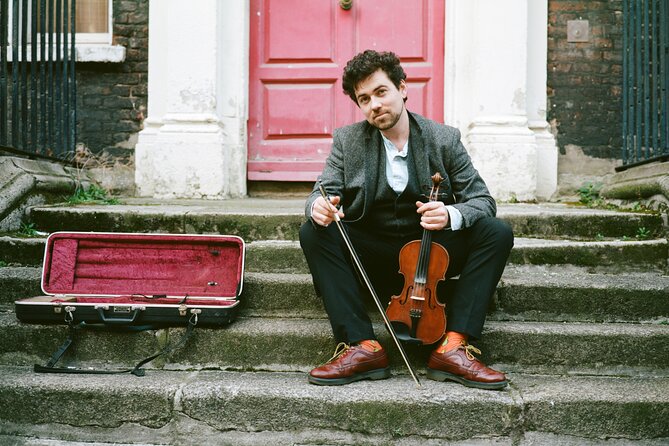
The strongest part of this experience is the way the guide pairs a place with a song. The music is not background decoration. A ballad, poem or tune can make the history feel close to ordinary lives, and the best guides use humor and explanation to give each performance context.
There is also a welcome range in the material. The tour can touch on folk music, theatre history, Dublin’s communities and the city’s political and social past. Some guides have performed songs in Gaelic, and an impromptu request has even brought Molly Malone into a walk. The exact songs will vary, but the music is central to the experience.
The trade-off is that this is an outdoor group activity in a city with street noise. A singer may be hard to hear if you hang back, and one group has found itself in the wrong walking tour after two groups met in the same area. Those problems do not define the experience, but they are practical reasons to confirm your guide and stay close.
The balance between music and history can also vary by guide. The accounts of Sean, Ciarán and Dylan are especially strong for their humor, performance and command of the material. The tour depends on the person leading it, so the energy may not be identical every day. The format itself, though, is clear: short walks, stories and live music at historic sites.
Is $27.81 good value?
At $27.81 per person, this is a reasonably priced way to combine a city walk with a live performance. You are paying for two hours with a musician-guide, several central landmarks and a form of local storytelling that is hard to get from a map or a self-guided route.
The value is strongest if you enjoy Irish music or want a cultural introduction to Dublin. You hear songs in the places they help explain, and you get practical conversation with a guide who can often suggest pubs and restaurants afterward. It is less suitable if your priority is entering every landmark, spending a long time at each site or receiving a detailed architectural lecture.
The tour is booked, on average, 32 days ahead. That is useful planning context if you have a fixed date, though it does not mean every departure will sell out. It is a two-hour commitment, starts at 1:00 pm and ends at St Patrick’s Cathedral, so leave room in your day for a one-way walk.
Who will enjoy this Dublin music walk?
I would choose this tour if I wanted to hear Irish songs in context rather than only in a pub setting. It suits first-time visitors who want a lively introduction to central Dublin, music fans curious about the city’s cultural past, and anyone who enjoys stories told with a bit of performance.
You do not need to know the songs in advance. The experience is designed to bring the music together with the places, and some groups have found themselves singing or dancing by the end. If you are shy, you can listen without joining in; participation is an option, not a condition of taking part.
The route is on foot for about two hours, and the tour information says most people can participate. Service animals are allowed, and the meeting point is near public transportation. If walking or standing for the full outing is a concern, confirm the physical demands with the operator before booking, since detailed accessibility information is not provided.
Should you book it?
Book this walk if you want Dublin’s landmarks with songs, humor and local stories woven through them. The combination of Fishamble Street, Christ Church Cathedral, Dublin Castle and a musician-guide gives you a memorable way to get your bearings without turning the afternoon into a lecture.
Skip it if you want a quiet, highly detailed tour of building interiors or prefer to explore at your own pace. For most people drawn to Irish music and city history, the price, two-hour length and central route make it a worthwhile addition to a Dublin visit. Arrive early, confirm you are with the music group and keep close enough to hear.
FAQ
How long is the Dublin Traditional Irish Music Walking Tour?
The tour lasts about two hours. The listed stops are short, around 10 minutes each, with walking between them.
What time does the tour start?
The start time is 1:00 pm.
Where does the tour meet?
Meet at 3 Crown Alley in Temple Bar, Dublin, D02 CX67.
Where does the tour finish?
The tour ends at St Patrick’s Park, beside St Patrick’s Cathedral, at St Patrick’s Close.
Which places does the walk visit?
The route includes Smock Alley Theatre, Grattan Bridge, Fishamble Street, Christ Church Cathedral, Dublin Castle’s Ship Street Gate and St Patrick’s Cathedral.
Is the guide a musician?
Yes. The tour is led by an Irish musician who tells stories through traditional songs. Guides have included Sean, Ciarán and Dylan.
How many people can join the tour?
The maximum group size is 20 people.
How much does the tour cost?
The listed price is $27.81 per person.
Can I cancel for a refund?
Yes. You can cancel at least 24 hours before the experience for a full refund. Cancellations made less than 24 hours before the start time are not refunded.
Recently reviewed in Dublin
- Private Dublin Treasure Hunt Self Guided Tour★ 4.5 · 14 reviews
- Banbridge: Game of Thrones Studio Entry & Tea with Transfers★ 4.8 · 56 reviews
- Dublin Ghost Hunt Exploration Game and Tour★ 4.0 · 34 reviews
- Day Tour from Dublin: Wicklow Mountains, Glendalough, Powerscourt★ 5.0 · 59 reviews
- Digby Lock Cruise – Explore Ireland’s Historic Grand Canal.★ 5.0 · 66 reviews
- Drinks on Foot: Dublin Traditional Pub Tour★ 5.0 · 62 reviews
- Dublin Street Art Walking Tour★ 5.0 · 68 reviews
- Dublin Jewellery Forge a Hammered Silver ring:Georges Street★ 5.0 · 59 reviews
Dublin Walking Tours, compared.
Dublin Highlights and Hidden Gems Guided Walking Tour
Read our review →

90 Minute Dublin Walking tour and Sightseeing tips
Read our review →

Dublin Traditional Irish 3 Course Meal Walking Tour with Local
Read our review →

Browse the lists this tour appears in