
Reviewed · DUBLIN HISTORY TOURS
1916 Rebellion Walking Tour
Dublin’s 1916 Rising is not tucked away in a museum. It unfolded in the city’s streets, at the GPO, and around buildings you can still see today. This walk links those places to the revolution and the events that led to it, making a complicated chapter easier to follow.
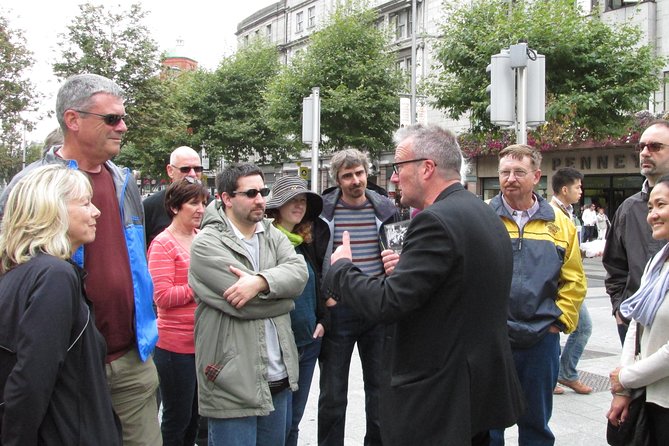
I like two things in particular: the tour begins with context reaching back to the Great Hunger, and the guide stops long enough at key sites, especially the GPO, to explain why they matter. Songs and storytelling may add a human note, depending on your guide.
One practical caution: the walk is advertised at about two hours, but at least one group found it took closer to three. The group can include up to 30 people, so expect a shared tour rather than a private conversation.
- The International Bar sets the scene: Begin with an introduction to the Famine, the build-up to revolution, and the 1916 Rising.
- A flexible route links major sites: City Hall, Dublin Castle, the Four Courts, monuments on O’Connell Street, the GPO, and sometimes Moore Street are among the stops.
- The GPO gets the longest visit: Allow about 30 minutes for the headquarters of the Rising and the reading of the Proclamation.
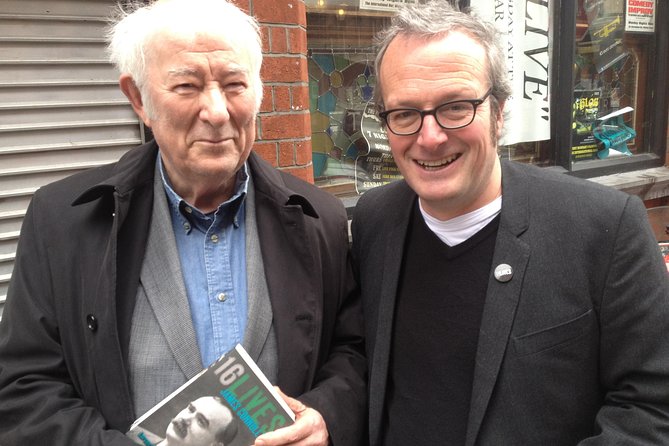
- The guide makes the difference: Lorcan Collins has run the tour since 1996, and guides such as Phelim, Liz, and Donal have also led engaging walks.
- It is good value for a history-focused walk: The price is $27.81 per person, with a professional guide included.
- Leave some room in your schedule: The route varies, and the walk may run over its approximate two-hour duration.
Start at the International Bar, with the story before the street

The meeting point is 23 Wicklow Street, at the International Bar, a pub with a long connection to the tour. The guide starts with a short introduction rather than sending you straight out to a monument. You get the broad outline of the events leading to the Rising, beginning with the Great Hunger of the 1840s and moving toward 1916.
That opening matters. The Rising is easier to understand when it is treated as part of a longer political story, not an isolated week of fighting. You can ask questions early, get acquainted with the guide, and hear how the day’s route is likely to run.
You are welcome to arrive early and buy a drink at the bar. Alcohol is not included in the $27.81 tour price, and there is introductory reading material supplied by the guide. Think of the pub stop as an optional chance to settle in, not a required pre-tour activity.
The tour is associated with Lorcan Collins, who has run it since 1996. Guides can vary: names mentioned by people who have taken the walk include Phelim, Liz, Donal, Phil, Elaina, and Adam. Their styles vary too. Some use songs or poetry alongside the history, while others bring in social history, including the role of women.
Follow the route from City Hall to Dublin Castle

City Hall is an early stop because the Irish Citizen Army occupied it during the Rising. Here, the guide can connect the building to the people involved and explain how the uprising played out beyond its best-known headquarters. The stop is planned for about 15 minutes, enough to introduce a new strand without turning the walk into a lecture at every corner.
At Dublin Castle, the focus shifts to the British administration that governed Ireland. The castle’s role in the Rising and the War of Independence helps explain why it mattered to revolutionaries. You do not need to arrive knowing the political cast of characters; the introductory talk and on-site explanation are meant to build the story step by step.
The stops are most useful as a pair. City Hall speaks to the revolutionary presence in Dublin, while the castle represents the authority that movement challenged. Your guide’s job is to make that contrast clear in the streets, where the buildings are part of the city’s working fabric, not just points on a history map.
The route is not fixed, so do not expect every group to visit every listed site in exactly the same order. The guide varies the walk, and some locations depend on the day’s route and available time. That keeps the tour from becoming a rigid script, but it also means you should treat the stop list as a guide to likely places rather than a guarantee.
More walking tours in Dublin:
- Dublin Highlights and Hidden Gems Guided Walking Tour
★ 5.0 · 6,020 reviews - Dublin: Highlights and Hidden Gems Walking Tour
★ 4.9 · 2,140 reviews - 90 Minute Dublin Walking tour and Sightseeing tips
★ 5.0 · 916 reviews
See the Four Courts from across the Liffey
The Four Courts were occupied by revolutionaries in 1916 and became important again in the build-up to the Irish Civil War in 1922. The guide discusses both episodes, using the building to show how Ireland’s struggle continued after the Rising itself.
The stop is best viewed from a bridge over the River Liffey rather than by walking all the way up to the courts. That viewpoint offers a useful way to talk about the building’s role without making the walk’s value depend on going inside. The emphasis is on history and explanation, not an interior visit.
This is also where the tour broadens its timeline. The 1916 Rising is the main subject, but its consequences led into later conflict, including the Civil War. If you have heard the names and dates but never quite understood how the events connect, this stop gives the guide a chance to draw those lines.
Read the bullet marks on O’Connell Street
At Daniel O’Connell’s monument, look closely for bullet holes associated with the Rising. The guide explains the positions held by British forces and Irish rebels in 1916, turning marks on a statue into evidence of conflict rather than decorative detail.
The nearby Jim Larkin statue adds a different perspective. Larkin, a union leader from Liverpool, was a close comrade of James Connolly and an ally of Dublin’s working class. His stop helps bring labour politics into the story, rather than presenting the Rising only as a series of military actions by a small group of famous figures.
These two monuments make a good street-level lesson: public statues can carry traces of the city’s political past. The guide gives you a reason to look carefully, then connects what you see to the wider story. Keep your attention on the explanation as well as the buildings; the tour’s value comes from the interpretation, not just passing the landmarks.
Spend time at the GPO, the Rising’s headquarters
The General Post Office is the tour’s central stop and the one allotted the most time, about 30 minutes. It served as headquarters for the revolutionaries in Dublin, and it is where P. H. Pearse read the Proclamation. The guide explains the events of Easter Week and why the building remains so important to Irish national memory.
I would give this stop your full attention. It brings together the political background from the opening, the people and movements discussed along the route, and the events that unfolded in 1916. The building is not simply a backdrop: it anchors the story and gives you a physical place to picture the Rising.
A guide’s delivery can add a lot here. Some lead with clear chronology; others weave in songs, poetry, humour, or personal stories. The subject is serious, but the tone need not be solemn every minute. The strongest approach keeps the tragedy in view while making the history approachable.
The GPO is also a useful point to check where you are in the schedule. The full walk is advertised at approximately two hours, but one group reported that its tour took nearly three. Since routes and explanations can vary, avoid booking something immediately afterward if being on time is important.
More history tours in Dublin:
- Dublin Historical Centre Food Tour with 8 Food Tastings & Drinks
★ 5.0 · 1,718 reviews - 2-Hour Historical Walking Tour from Dublin
★ 5.0 · 875 reviews - Historical 2-Hour Guided Walking Tour of Dublin
★ 4.7 · 865 reviews - Dublin: Jeanie Johnston Tall Ship Irish Famine History Tour
★ 4.8 · 431 reviews
Moore Street, the final stand, and optional detours
Depending on the time available, the guide may continue to Moore Street, where the GPO garrison made its last stand during Easter Week. This adds a final chapter to the route, moving from the headquarters to the end of the fighting for that group.
The phrase depending on time is worth taking literally. Moore Street is not certain on every walk, and the route can change to keep the tour varied. If this location is especially important to you, ask the guide at the start whether it is likely to be included that day.
The Bank of Ireland, once the Irish Parliament, and neighbouring Trinity College may also feature, depending on the route. These stops broaden the historical frame beyond the Rising itself. They are useful context, but they are not guaranteed, so book this tour for the core story and main landmarks rather than a promise to see every named site.
What $27.81 buys you, and who will get the most from it
At $27.81 per person, you are paying for a professional guide and a two-hour-or-so walk through several central Dublin sites. The stops have no admission charge listed, and the experience is built around seeing the landmarks from the street while hearing the history explained. For someone who wants more than a quick look at the GPO, that is a fair use of two hours.
The price makes particular sense if you are curious about Irish history but do not yet have a strong grasp of the Rising. You do not need prior knowledge. The opening provides a foundation, and the walk connects buildings and monuments to the people and events discussed along the way.
History buffs should find enough detail to make the walk worthwhile, especially if they enjoy asking questions and following the story into the War of Independence and Civil War. It also suits visitors who learn best by seeing places in context. Several guides have been praised for clear speech, humour, engaging delivery, and lively storytelling; some sing songs linked to the period.
It may be less ideal if you want a very small group, a fixed route, or a strict two-hour finish. The maximum group size is 30, and one group found that number large. This is also a subject with a lot of names, politics, and dates, so you will get more out of it if you are willing to listen closely and ask for clarification.
Wear shoes you are comfortable walking in, and plan for an outdoor experience: the tour is a walk through the city rather than a sequence of indoor museum visits. The tour requires good weather; if poor weather cancels it, you are offered another date or a full refund. Children must be accompanied by an adult, and most people can take part.
Should you book the 1916 Rebellion Walking Tour?
Book it if you want to understand why the GPO, City Hall, Dublin Castle, and the monuments along the route matter to Ireland’s revolutionary story. The best reason to go is the guide-led connection between the city you see and the events that shaped it. The walk works for newcomers as well as people who already know the main names.
I would choose another plan if you need a guaranteed route or cannot spare extra time beyond two hours. If you have room in your schedule and want history told on the streets where it happened, this is a strong-value way to make Dublin’s 1916 story clearer.
FAQ
How long is the 1916 Rebellion Walking Tour?
It is advertised as approximately two hours. The time can vary, and one group reported a tour lasting close to three hours.
How much does the tour cost?
The listed price is $27.81 per person. A professional guide is included, while alcoholic drinks are available to buy separately.
Where does the tour start?
It starts at 23 Wicklow Street in Dublin, at the International Bar, where the guide gives an introduction before the walk.
Where does the tour end?
The activity ends back at the meeting point.
Is the tour conducted in English?
Yes. English is the offered language.
Do I need to know Irish history before joining?
No. The introductory talk covers background leading up to the 1916 Rising, starting with the Great Hunger of the 1840s. The tour is also suitable for people with an existing interest in Irish history.
Which places does the tour visit?
Possible stops include City Hall, Dublin Castle, the Four Courts, the O’Connell Monument, the Jim Larkin statue, the GPO, Moore Street, and the Bank of Ireland. The guide varies the route, so not every stop is guaranteed.
How large can the group be?
The maximum group size is 30 people.
What happens if bad weather cancels the tour?
If the experience is canceled because of poor weather, you are offered a different date or a full refund.
Recently reviewed in Dublin
- Private Dublin Treasure Hunt Self Guided Tour★ 4.5 · 14 reviews
- Banbridge: Game of Thrones Studio Entry & Tea with Transfers★ 4.8 · 56 reviews
- Dublin Ghost Hunt Exploration Game and Tour★ 4.0 · 34 reviews
- Full-day Award Winning Private Dublin City Highlights Tour★ 4.5 · 62 reviews
- Private Transfer from Dublin airport to Dublin city center – One way Minivan★ 4.0 · 66 reviews
- Merry Ploughboys Irish Night Dublin Admission Ticket★ 4.5 · 59 reviews
- From Dublin: Galway and Kerry 3-Day Budget Tour★ 4.3 · 66 reviews
- Semi-Private (8people max) 2.5 Hr Dublin Walking Tour★ 5.0 · 69 reviews
Dublin History Tours, compared.

Dublin Historical Centre Food Tour with 8 Food Tastings & Drinks
Read our review →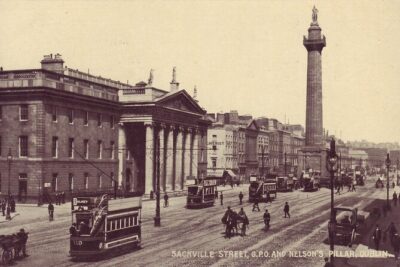

Jeanie Johnston Tall Ship Irish Famine History Tour
Read our review →

Deliciously Dublin: The Artisan Donut Walking & History Tour
Read our review →
Hidden Dublin: Haunted History Walking Tour v2.0 2026
Read our review →
Walking Tour of Dublin’s Viking/Medieval Quarter with a Viking
Read our review →
Dublin Private Highlights & History of 1916 Easter Rising Tour
Read our review →Browse the lists this tour appears in