
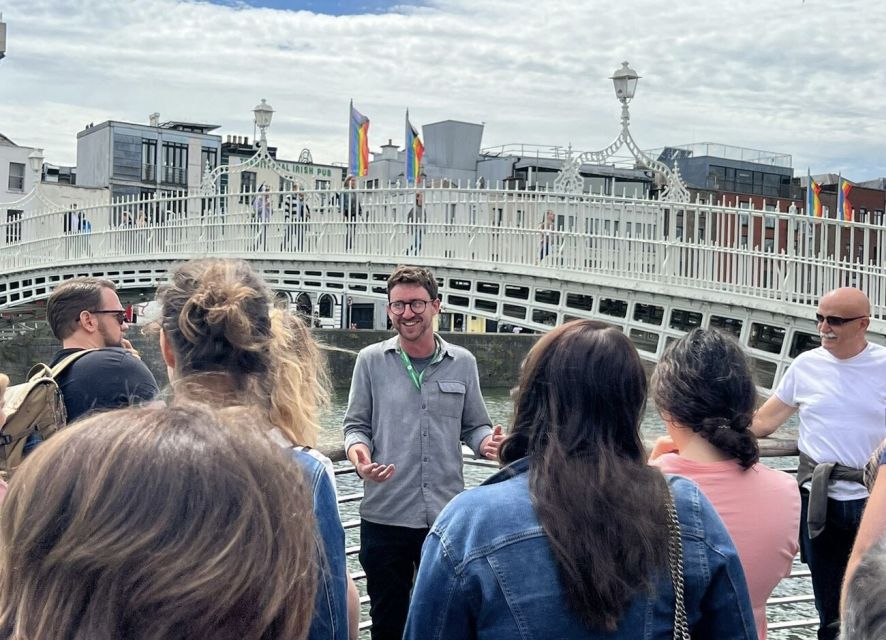
Reviewed · DUBLIN WALKING TOURS
Dublin: Mythology, Folklore and Legends Walking Tour
Dublin’s myths are not kept behind museum glass. On this two-hour walk, they meet you on city streets, from Temple Bar’s Celtic origins to the Georgian Quarter’s grim stories and O’Connell Street’s Gaelic revival. Along the way, your guide brings Irish folklore to life through tales of the banshee, púca, leprechaun, and ancient warriors.
I like two things in particular: the tour gives familiar sights a fresh angle, and it makes room for lesser-known corners that a standard city walk may skip. The guides named in the tour include Helena, Lee, Emily, and Dave, all praised for lively storytelling, humor, and a knack for keeping the group engaged.
One consideration: this is a story-led walk, not a deep architectural or chronological history tour. If you want detailed dates at every landmark, you may want to pair it with a more conventional Dublin history tour.
What makes this Dublin walk different
- Folklore with a city address: Start in Temple Bar and connect Irish myth and Celtic beliefs with the streets around you.
- Familiar sights, unexpected stories: See Temple Bar and O’Connell Street through tales of legend, identity, and cultural change.
- A darker Georgian Quarter: Hear about rebellion, grave robbing, and revolutions, then learn the tragic history of the Abbey Theatre.
- Irish creatures, not just leprechauns: The stories include the banshee and púca, alongside fairies and ancient warriors.
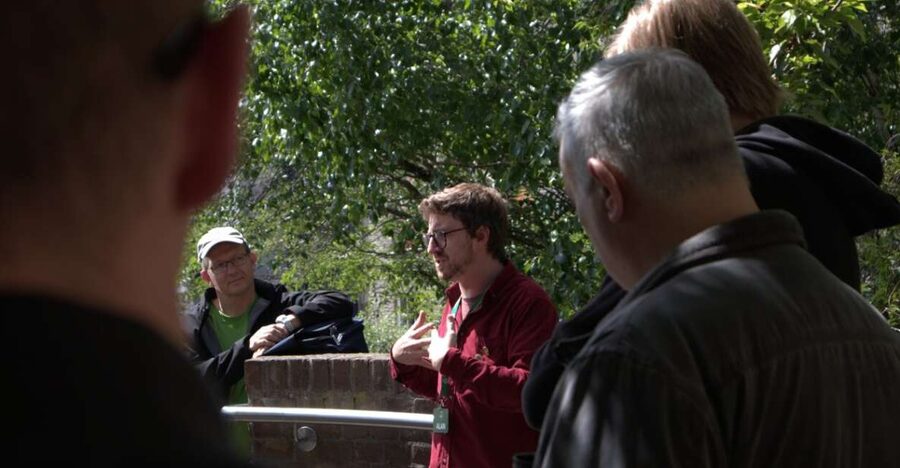
- A human, flexible pace: Guides such as Helena and Lee are praised for humor, warmth, and attention to the group’s energy.
- A practical first-day choice: The walk ends where it begins, and guides may also offer suggestions for exploring Dublin afterward.
Starting among Temple Bar’s Celtic stories
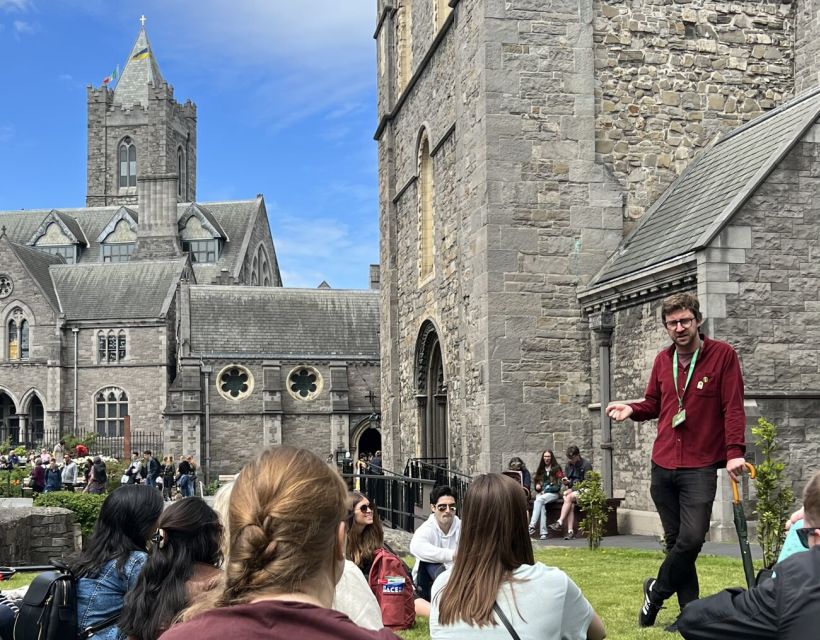
Meet outside The Old Storehouse pub in Temple Bar, looking for the green umbrella. That is a useful detail in a busy part of town, so arrive with enough time to find the group rather than trying to spot a guide at the last second.
The walk begins with Ireland’s mythical origins and the beliefs and traditions associated with Celtic culture. This is a good starting point because the tour is not simply a parade of famous characters. It uses the old stories to explain how folklore helped shape Irish identity, giving you a framework for understanding what follows.
Temple Bar is well known, but this tour is not just a pass through its familiar streets. The guide uses the area to introduce a way of looking at Dublin in which stories and place sit side by side. If you have already seen the district on your own, the folklore angle can make it feel less like a stop on a nightlife map and more like a doorway into Ireland’s older storytelling traditions.
The guide matters especially here. A myth can be hard to follow if it arrives as a list of names and events; a good storyteller makes the characters and their stakes clear. Helena, Emily, Lee, and Dave are among the guides associated with this tour, and the strongest praise for them centers on their energy, humor, and ability to hold attention.
More walking tours in Dublin:
- Dublin Highlights and Hidden Gems Guided Walking Tour
★ 5.0 · 6,020 reviews - Dublin: Highlights and Hidden Gems Walking Tour
★ 4.9 · 2,140 reviews - 1916 Rebellion Walking Tour
★ 5.0 · 1,605 reviews
Meeting the banshee, púca, and other Irish figures
Fairies in Irish folklore are not merely cute decorations for a souvenir shop. The tour introduces mythical creatures such as the banshee, púca, and leprechaun, as well as Ireland’s ancient warriors. You get a chance to hear these characters in the context of Irish and Gaelic storytelling rather than as isolated curiosities.
That context is part of the tour’s value. The tales help show why oral storytelling has mattered in Irish culture, and how a shared body of stories can shape a sense of national identity. If you are new to Irish mythology, the guide can give you a useful first map of its characters and traditions. If you already know some Irish history, the myths offer a different route into the subject.
Expect the tour to favor engaging stories over exhaustive scholarship. It is designed as an accessible walk through mythology and folklore, not a specialist seminar. You can ask questions, and the guide’s conversational style helps make complicated or unfamiliar tales easier to follow.
The stories also give you something to carry into the rest of your trip. After the tour, you may find yourself noticing how folklore and cultural memory come up in other conversations about Ireland. That broader connection is why this walk works well at the beginning of a Dublin visit: it gives you a new lens for what you see next.
Turning into the Georgian Quarter’s darker past
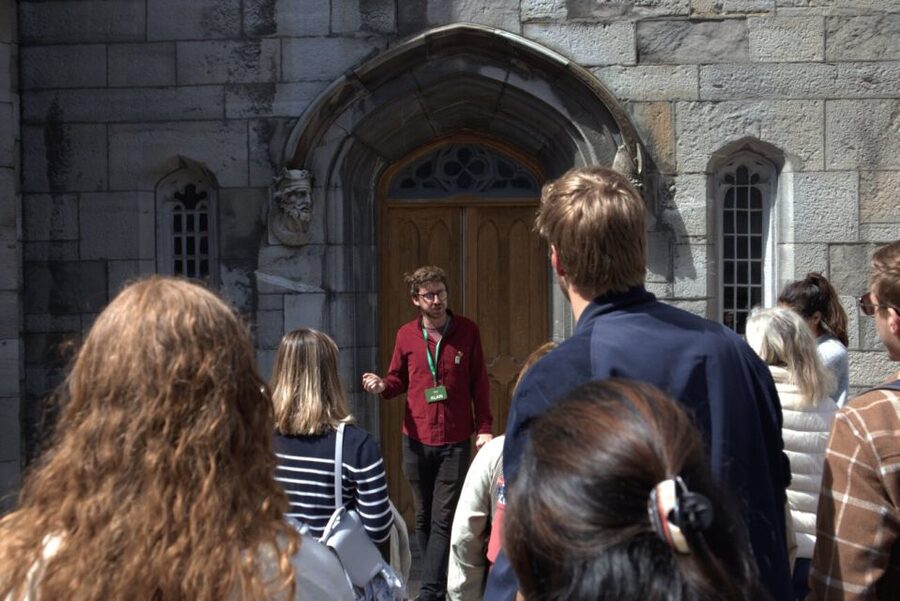
The route moves off the usual tourist track into the Georgian Quarter, where the tone shifts. Here, the tour takes in the area’s macabre side, including stories of rebellions, grave robbing, and revolutions. It is an intriguing counterweight to the more magical material: Dublin’s past includes human violence and political upheaval as well as mythical beings.
This section is likely to suit you if you enjoy history with a shadowy edge. The stories can make a familiar urban setting feel charged with events that are not always part of a quick sightseeing circuit. But the tour keeps the emphasis on storytelling, so you should not expect a detailed examination of every Georgian building or a full account of Ireland’s political history.
The Abbey Theatre also enters the narrative through its tragic history. That gives the walk another way to connect cultural life with the city’s past. Rather than treating the theatre only as a landmark, the guide places it within a wider story of Irish identity and change.
There are several stops along the way, and the walk is not described as a nonstop march. Some participants have appreciated the pauses and the chance to listen while resting. The route still involves walking, so comfortable shoes are sensible, but the tour’s pacing is meant to leave room for stories rather than rush you between sights.
Reaching O’Connell Street and the Gaelic revival
The walk finishes on O’Connell Street with an introduction to the revival of the Gaelic language and culture in Ireland. This ending brings the tour’s strands together. You have heard about old myths and creatures, then about rebellion and cultural history; now the guide turns to efforts to renew Irish language and identity.
The conclusion also includes an introduction to some of Dublin’s contemporary street characters. That present-day note helps keep the tour from feeling like a trip into a sealed-off past. Folklore is presented as part of a continuing cultural conversation, not just a collection of old tales.
O’Connell Street is a fitting place to close because it is a major Dublin thoroughfare with a strong connection to the city’s public life. The tour does not claim to explain every aspect of the street, but it gives you a cultural thread to follow as you look around. The route then returns to the original meeting point, so you do not have to plan a separate journey back to where you started.
More Dublin tours:
- Dublin to Cliffs of Moher, including Wild Atlantic Way and Galway
★ 5.0 · 23,331 reviews - From Dublin: Cliffs of Moher, Burren & Galway City Day Tour
★ 4.8 · 18,888 reviews - Dublin: Guinness Storehouse Entry Ticket
★ 4.6 · 16,863 reviews - Dublin to Cliffs of Moher, Burren, Wild Atlantic Way, Galway Tour
★ 5.0 · 12,924 reviews
How the guide shapes the experience
This tour depends more on the guide’s storytelling than on a set of elaborate site visits. The most consistently praised qualities of Helena, Emily, Lee, and Dave are warmth, humor, enthusiasm, and the ability to make stories easy to follow. Several guides are also noted for answering questions and offering ideas for things to do after the walk.
That personal delivery is a real advantage if you are traveling with children, or if you are tired of tours that feel like a lecture. Dave, for example, has been described as keeping children interested, while Helena is praised for being attentive to the group’s energy and choosing suitable places to pause. These examples do not guarantee which guide you will have, but they give you a sense of the tour’s style.
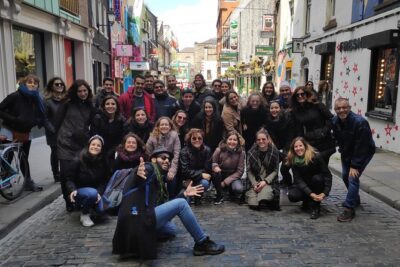
The group size can vary. Some walks have been small, while another participant described a group of a decent size. If a compact group is important to you, keep in mind that the exact number of people is not specified. In any case, the guides’ conversational manner appears to be a strength of the experience.
The walk can also work in less-than-ideal weather. Emily has been credited with keeping the group engaged in the rain, but you should still dress for Dublin’s changeable conditions. There is no need to assume the weather will cooperate just because the stories are lively.
Is two hours and $27 good value?
At $27 per person, this is a modestly priced way to add a focused cultural experience to a Dublin stay. You are paying for a local folklore guide and a two-hour walking tour, not transport or hotel pickup. The value lies in the stories and interpretation: you can walk through parts of the city on your own, but it is harder to recreate the links between Irish mythology, cultural identity, and specific Dublin locations without a guide.
It is particularly good value if you want something beyond the standard city highlights. The walk adds context to Temple Bar and O’Connell Street, while taking you into less-frequented parts of the city and the Georgian Quarter. It also pairs well with a more conventional history or architecture tour rather than trying to replace one.
The price may feel less worthwhile if you are mainly interested in seeing buildings, taking photos, or covering as much ground as possible. The main attraction is the spoken material, and the stories are the point. Choose this tour if you enjoy folklore and a guide who can turn a walk into an unfolding narrative.
It lasts two hours, with starting times shown when you check availability. The tour is in English, is listed as wheelchair accessible, and ends back at the meeting point. Hotel pickup and drop-off are not included, so plan to reach Temple Bar on your own.
Who should take this tour?
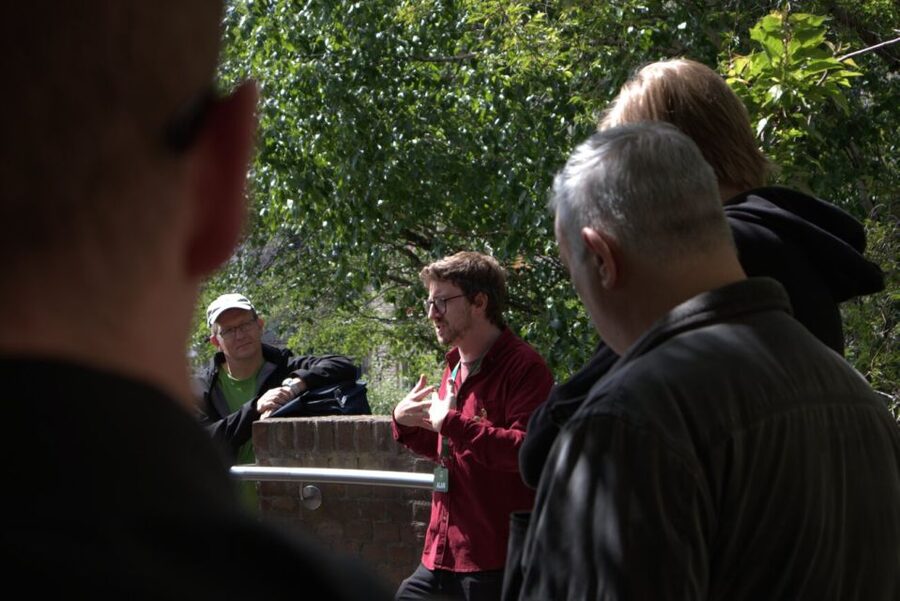
I would put this near the start of a Dublin visit if you want a friendly introduction to Irish myths and cultural history. The stories may help you make more sense of later visits and conversations, and the guide can offer recommendations for what to see next. It is also a useful choice if you have already booked the classic sightseeing tours and want a different subject.
Families may appreciate the lively delivery and pauses, particularly if children like strange creatures and dramatic stories. History-minded visitors can get a fresh angle on Irish identity, though anyone seeking a tightly dated political history should treat this as a complement, not a substitute.
The tour may be less appealing if you dislike walking or would rather spend two hours inside a museum. It is also not a route for checking off every major Dublin landmark. Its strength is narrower and more distinctive: folklore, storytelling, and the way both have helped shape the city and the country.
Should you book it?
Book this walk if you want Dublin to come with stories attached. The mix of Celtic traditions, mythical creatures, the Georgian Quarter’s darker history, and the Gaelic revival gives the two hours a clear arc, while guides such as Helena, Emily, Lee, and Dave are known for keeping the experience warm and entertaining.
Skip it if your priority is detailed architectural commentary or a fast survey of the city’s main sights. For a reasonable price, though, this is a strong choice for curious visitors, families, and anyone who wants a more unusual way into Irish culture. If you are deciding between it and another classic sightseeing tour, consider using this one to add a different layer to your Dublin itinerary.
FAQ
Where does the tour start?
Meet outside The Old Storehouse pub in Temple Bar. Look for the green umbrella.
Where does the tour end?
The walk returns to the original meeting point.
How long is the tour?
The tour lasts two hours. Starting times are available when you check availability.
What language is the tour in?
The live tour guide speaks English.
Is the tour wheelchair accessible?
Yes, the activity is listed as wheelchair accessible.
Is hotel pickup included?
No. Hotel pickup and drop-off are not included.
Recently reviewed in Dublin
- Private Dublin Treasure Hunt Self Guided Tour★ 4.5 · 14 reviews
- Banbridge: Game of Thrones Studio Entry & Tea with Transfers★ 4.8 · 56 reviews
- Dublin Ghost Hunt Exploration Game and Tour★ 4.0 · 34 reviews
- Merry Ploughboys Irish Night Dublin Admission Ticket★ 4.5 · 59 reviews
- From Dublin: Galway and Kerry 3-Day Budget Tour★ 4.3 · 66 reviews
- Semi-Private (8people max) 2.5 Hr Dublin Walking Tour★ 5.0 · 69 reviews
- Dublin: Music Under the Bridges Kayaking Tour★ 4.8 · 65 reviews
- Dublin: Howth Coastal Craft Beer and Seafood Tour★ 5.0 · 62 reviews
Dublin Walking Tours, compared.
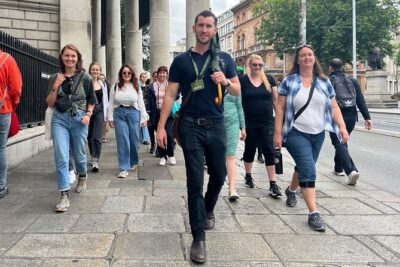
Dublin Highlights and Hidden Gems Guided Walking Tour
Read our review →
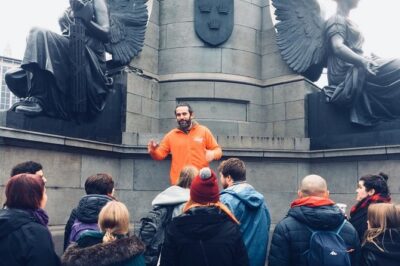
90 Minute Dublin Walking tour and Sightseeing tips
Read our review →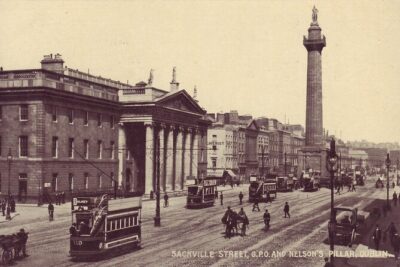

Dublin Traditional Irish 3 Course Meal Walking Tour with Local
Read our review →
Browse the lists this tour appears in