

Reviewed · DUBLIN WALKING TOURS
DayTripper Dublin: A Guided City Walking Tour
Dublin makes more sense when its streets, statues and old buildings come with a guide who can connect them to Ireland’s story. This 2.5-hour walk links familiar sights with the history behind them, from Viking Dublin to the political struggles of the 20th century.
I like two things in particular: the central route gives you a useful first look at the city, and the guide can share practical recommendations for food and what to do next. The tour also leaves room for questions, so you can ask about the subjects that interest you most.
One point to weigh: this is a brisk overview, not an in-depth visit to every landmark. You do not enter St Patrick’s Cathedral, Dublin Castle, Christ Church Cathedral or Trinity College, and the tour may take closer to three hours than its approximate 2.5-hour listing suggests.
Key points to know
- A strong first-day orientation: The route covers central Dublin sights and can help you plan the rest of your stay.
- History with local context: Expect discussion of Irish culture, Viking Dublin, the Famine and the struggle for independence.
- Outside visits, not admissions: Several major landmarks are viewed from gardens, courtyards or the street.
- Ask for tailored tips: Guides have helped guests shape the walk around interests such as women’s history and have offered suggestions for the rest of the day.
- A manageable group cap: The tour allows up to 25 people, though some walks have had just one participant.
- Good value for a guided overview: At $27.82 per person, you get an in-person guide for a route that touches many central sights.
A city walk that puts the sights in context
DayTripper Dublin is best thought of as an introduction to the city, not a ticket to its interiors. In roughly two and a half hours, you walk through central Dublin, stopping at parks, streets, statues and courtyards while your guide ties them to Irish culture and history.
That approach can be especially useful at the start of a visit. Dublin’s landmarks are close enough to tempt you into a quick photo and a quick move on, but the stories behind them are not always obvious. A guide can help you see why a statue matters, what a place represents and how to make sense of the city’s past.
The tour’s strongest praise centers on its guides’ ability to explain history clearly and keep the walk engaging. Names appearing in past experiences include Ciarán, Ciaran, Keiron and Kyron, but your guide may be someone else. The useful point is the style described: local perspective, clear explanations, room for questions and practical advice at the end.
Starting by St Stephen’s Green
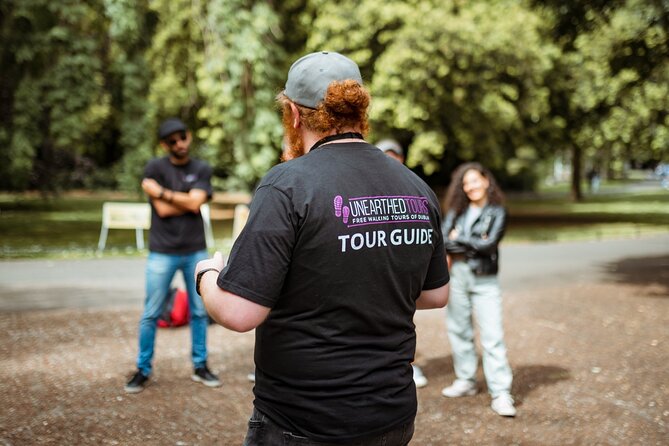
The listed meeting point is the Wolfe Tone Sculpture at St Stephen’s Green. It is a central place to begin, and the park gives the guide a natural setting for an opening conversation about Irish history and culture.
You spend about 15 minutes in or around St Stephen’s Green. That is enough for an introduction, not a full park visit. If the gardens are a priority, plan to return later and explore at your own pace.
The route information also lists the Wolfe Tone statue as a stop near the end, while naming the sculpture at St Stephen’s Green as the meeting point. The details are not perfectly clear about how those entries fit together, so check the meeting instructions you receive before setting off.
There is also a stop for discussion of Irish dance and music, but no named location or duration is provided. Treat it as a cultural topic along the walk rather than a scheduled performance.
More walking tours in Dublin:
- Dublin Highlights and Hidden Gems Guided Walking Tour
★ 5.0 · 6,020 reviews - Dublin: Highlights and Hidden Gems Walking Tour
★ 4.9 · 2,140 reviews - 1916 Rebellion Walking Tour
★ 5.0 · 1,605 reviews
Grafton Street and Molly Malone
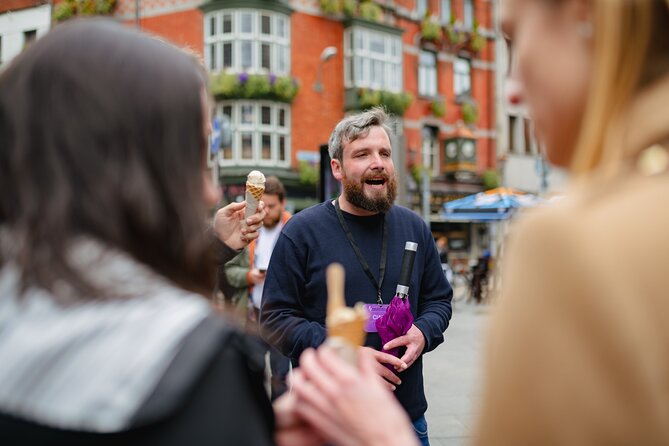
From the park, the walk moves to Grafton Street, one of Dublin’s busiest high streets. The guide spends about 10 minutes here, giving you a quick look at the commercial heart of the city and a chance to hear about the street as you walk through it.
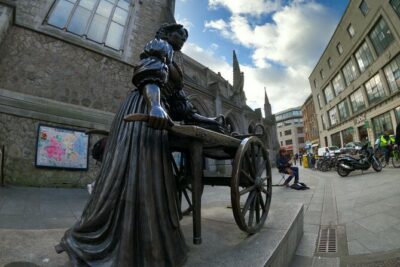
Next comes the Molly Malone Statue, with about 10 minutes devoted to the figure and working-class Dublin. This is a compact stop, but it adds a social angle to a tour that also covers political history and major institutions.
These short visits are helpful for orientation, though they are not meant to replace a slower wander. If a street performer or shop catches your eye, note it for later. The pace is designed to keep the larger route moving.
St Patrick’s Cathedral and Dubh Linn Gardens
At St Patrick’s Cathedral, the guide meets you in the gardens and discusses the origins of Dublin. The stop lasts about 10 minutes, and the cathedral itself is not included. That distinction matters if you want to see the interior: you will need to make a separate visit and arrange admission independently.
The nearby Dubh Linn Gardens provide a quieter pause and a link to Dublin’s Viking past. The gardens are described as a landmark with roots reaching back to Viking Dublin, making this stop a useful bridge between the city’s early history and its later political story.
I like the contrast here. A cathedral garden and a small green space can make a city’s history feel less abstract than a string of dates. Still, expect a short explanation rather than a long stay. If you want more time at either location, plan a return visit.
Dublin Castle and Christ Church Cathedral
The group heads into the courtyards of Dublin Castle for a discussion of the castle’s history and the political struggles associated with Ireland and Northern Ireland. The tour does not enter the castle buildings, and the stop is about 10 minutes.
That outside view is useful for placing the castle within the city, but it will not satisfy anyone hoping to explore its rooms or exhibitions. Think of it as a guided introduction that can help you decide whether to return for a longer visit.
At Christ Church Cathedral, the guide takes you into the courtyard and talks about the cathedral’s founding and Viking history. Again, the walk stays outside. The stop is listed as about 10 minutes, and admission is not included.
This is one of the route’s clearer trade-offs. You see several major sights in a short span, which is good for building a mental map, but you should not expect much time at any one of them. If interiors are your priority, use the walk to identify the places you want to visit later.
More guided tours in Dublin:
- Dublin to Glendalough, Wicklow and Kilkenny Full Day Guided Tour
★ 5.0 · 4,895 reviews - Dublin Book of Kells, Castle and Molly Malone Statue Guided Tour
★ 4.5 · 3,825 reviews - The Little Museum of Dublin Famous Guided Tour
★ 5.0 · 2,948 reviews - Dublin Jameson Distillery and Guinness Storehouse Guided Tour
★ 4.5 · 2,608 reviews
Temple Bar and O’Connell Street
Temple Bar gets a brief five-minute pass through the neighborhood. That is enough to locate it and hear a little about the area, but not enough for a full meal, pub stop or leisurely look around.
The route then moves to O’Connell Street for about 10 minutes of discussion about Ireland’s political story in the 20th century, using statues along the street as reference points. This stop gives the walk a more direct look at the country’s recent past.
Together, these stops show the range of the tour: cultural quarter, major street, public monuments and political history. The pace is quick, but the mix helps you connect neighborhoods that might otherwise feel like separate sightseeing tasks.
Trinity College and the end at College Green
The final listed stop is outside Trinity College and the Central Bank of Ireland. The guide discusses Trinity and the Great Irish Hunger, also known as the Famine. You do not enter Trinity College, and the stop is about 10 minutes.
The tour ends at College Green, close to Grafton Street. Tara and Pearse stations are about a 15-minute walk away, while Grafton Street is about two minutes away. That makes the finish convenient if you want to continue exploring on foot or head toward the city’s public transport.
The route’s Famine discussion is a reminder that this is not just a checklist of buildings. The guide connects landmarks to events that shaped Ireland and its people. If that subject matters to you, ask questions while you are there; the tour is designed to make space for conversation as you walk.
What the timing and group size mean
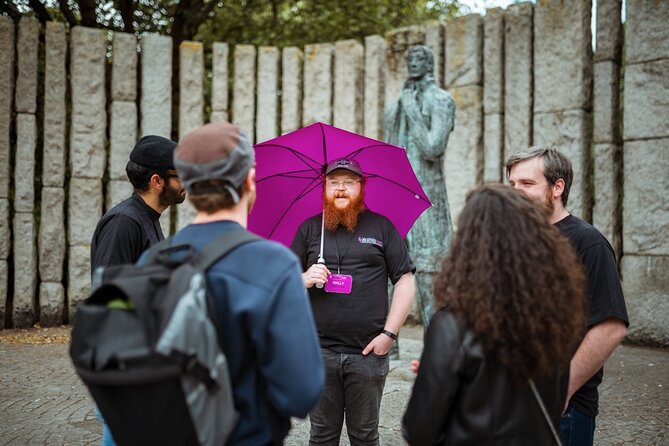
The advertised duration is approximately 2 hours and 30 minutes. At least one past participant describes a walk lasting three hours, so leave some breathing room afterward rather than booking a tight appointment immediately after the finish.
The listed stops add up to a brisk schedule, and the music stop has no stated duration. Actual timing may vary with the guide’s pace, questions and group. That flexibility can be a plus if you enjoy conversation, but it may frustrate you if you need a firm end time.
The maximum group size is 25. Some past walks have been much smaller, even down to one person when other participants did not arrive. You cannot count on a private tour, but a smaller group can make it easier to ask questions and steer the conversation toward your interests.
One participant asked to focus on women’s history, and the guide adjusted the discussion. That is a useful sign of the tour’s potential flexibility, though it does not guarantee a particular subject or amount of time. If you have a specific interest, raise it early.
Is $27.82 good value?
At $27.82 per person, you are paying for an in-person guide and a wide-ranging introduction, not entry to attractions or a meal. Lunch is not included, and several stops remain outside-only. Keep that in mind when comparing the price with a ticketed attraction or a small-group indoor visit.
The value is strongest if you use the walk to get your bearings and gather ideas for the rest of your trip. A guide can connect sights that might otherwise be confusing, answer questions as they come up and suggest places to eat or visit afterward. One guide also helped a participant plan the remainder of a day in port, which is a practical bonus if your Dublin time is limited.
The tour has a 5 out of 5 rating from 90 reviews, and 99% of travelers recommend it. The positive feedback most often points to clear history, an engaging manner, local knowledge and helpful recommendations. Those are the qualities that matter most for an introductory walk, though they still depend on the guide you get and how much you like learning while on the move.
Who should book this Dublin walk?
I would put this tour near the top of the list for a first visit, especially if you want a lively orientation before exploring on your own. It suits curious walkers who enjoy Irish history and culture, want to ask questions and do not need to go inside every landmark on the same outing.
It is also a sensible choice if you have limited time in Dublin. The route strings together many central sights, and the end point is near Grafton Street. Take notes on the guide’s suggestions so you can turn the walk into a plan for the rest of the day.
You may want a different experience if your main goal is to spend time inside the cathedral, castle or Trinity College. This tour does not include those admissions, and the short stops leave little time for lingering. Book it for the stories and city orientation, then arrange separate visits to the interiors that interest you.
The tour is offered in English, uses a mobile ticket and has a maximum of 25 participants. It requires a moderate level of physical fitness, and service animals are allowed. Bookings are often made well ahead, with an average lead time of 47 days. Free cancellation is available up to 24 hours before the start; changes or cancellations inside that window are not accepted.
FAQ
How long does the tour last?
The approximate duration is 2 hours and 30 minutes. Some past experiences have lasted closer to three hours, so leave extra time after the walk.
Where does the tour start?
The listed meeting point is the Wolfe Tone Sculpture at St Stephen’s Green in Dublin. Check your booking confirmation for the exact meeting instructions.
Where does the tour end?
It ends at College Green. Grafton Street is about a two-minute walk away, and Tara or Pearse Station is about a 15-minute walk away.
Does the tour enter Dublin Castle?
No. The guide visits the courtyards and discusses the castle, but entry to the castle is not included.
Do we go inside St Patrick’s Cathedral or Christ Church Cathedral?
No. The tour visits the gardens or courtyard and discusses each cathedral from outside. Admission is not included.
Does the tour enter Trinity College?
No. The guide stops outside Trinity College and discusses its history and the Famine.
Is lunch included?
No. Lunch is not included in the tour price.
What is the cancellation policy?
You can cancel for a full refund up to 24 hours before the experience starts. Cancellations or changes made less than 24 hours before the start are not accepted.
Recently reviewed in Dublin
- Private Dublin Treasure Hunt Self Guided Tour★ 4.5 · 14 reviews
- Dublin Ghost Hunt Exploration Game and Tour★ 4.0 · 34 reviews
- Banbridge: Game of Thrones Studio Entry & Tea with Transfers★ 4.8 · 56 reviews
- Dublin: Howth Coastal Craft Beer and Seafood Tour★ 5.0 · 62 reviews
- Dublin: Walking Tour for Foodies with Tastings★ 4.8 · 65 reviews
- 2 Hour Walking Tour of Dublin’s City Centre★ 5.0 · 63 reviews
- 4-Day Blarney Castle, Ring of Kerry, Cliffs of Moher & Connemara★ 4.5 · 60 reviews
- Cliffs of Moher & Galway Bay private tour or Galway city day trip★ 5.0 · 62 reviews
Dublin Walking Tours, compared.
Dublin Highlights and Hidden Gems Guided Walking Tour
Read our review →
90 Minute Dublin Walking tour and Sightseeing tips
Read our review →

Dublin Traditional Irish 3 Course Meal Walking Tour with Local
Read our review →
Browse the lists this tour appears in