Reviewed · DUBLIN TOURS
St Patrick’s Cathedral: Self-Guided Cathedral Admission
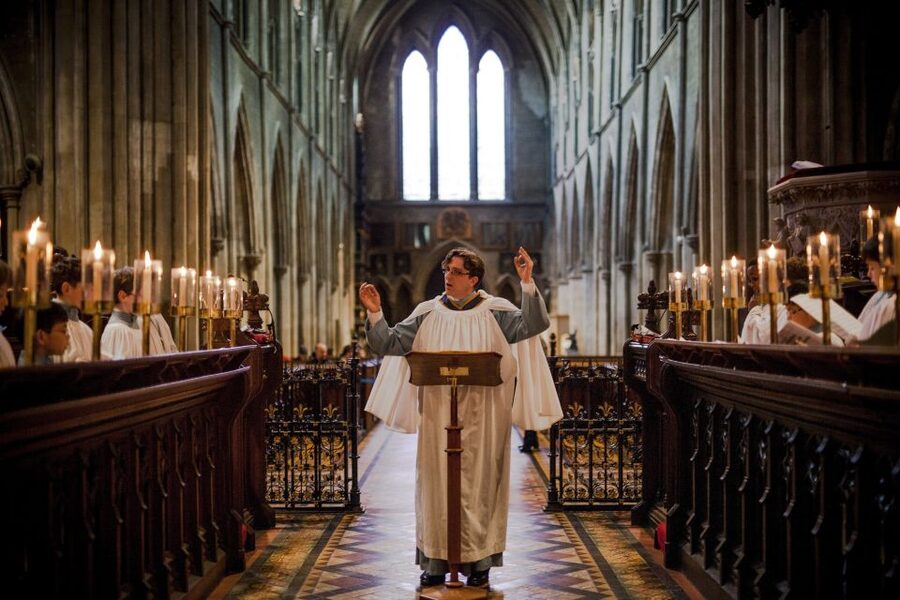
Saint Patrick’s Cathedral joins a place of worship to a lesson in Ireland’s past. Built in 1220 near a well associated with Saint Patrick’s visit to Dublin, it has served as a pilgrimage site and a landmark for more than 800 years. Inside, look beyond the soaring Gothic form to find Jonathan Swift’s memorial and the stained-glass window that tells Saint Patrick’s story in 39 images.
I like two things in particular: the audio guide lets you explore at your own pace, and the Discovery Space gives you a tactile way to engage with the building through interactive screens and brass rubbing. One consideration: there is a lot to take in, and at busy times the hush and space you might hope for can be harder to find.
At a glance
- Follow the cathedral’s long story: Saint Patrick’s dates to 1220 and serves as the National Cathedral of the Church of Ireland.
- Find Jonathan Swift’s memorial: The author of Gulliver’s Travels was dean here from 1713 to 1745.
- Look for the Door of Reconciliation: This unusual feature is linked to the Irish expression chance your arm.
- Use the audio guide your way: The included guide is available in English, French, German, Italian, Spanish and Irish.
- Make time for the Discovery Space: Touch-screen displays, choir samples and brass rubbing add variety to a mostly self-guided visit.
Arriving at a cathedral built for Saint Patrick
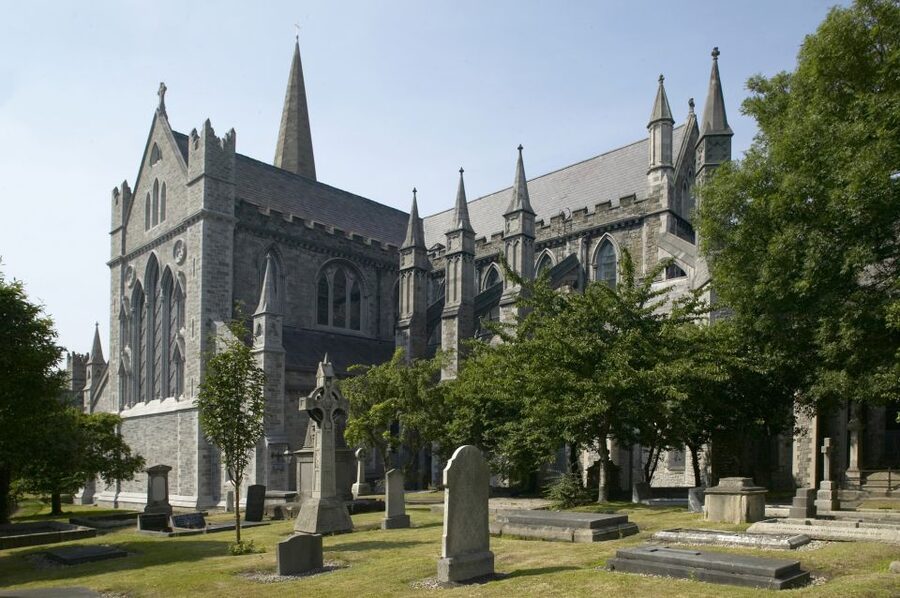
Saint Patrick’s Cathedral is in central Dublin, in County Dublin, and the visit begins at the cathedral itself. The site’s connection to Saint Patrick reaches back beyond the present building: tradition places a well nearby where he baptized converts during a visit to Dublin. That link helps explain why this is not simply a striking church to admire, but one of Ireland’s important pilgrimage sites.
The cathedral was built in 1220 and has been part of Dublin’s religious and civic life for more than eight centuries. It is the National Cathedral of the Church of Ireland, and it still hosts sung services twice daily from Sunday through Friday. If you visit during a service, remember that this remains an active place of worship as well as a visitor attraction.
Your admission is self-guided, so you are not locked into a set route or pace. The ticket includes an audio guide and skips the ticket line, making this a straightforward stop to fit into a day of exploring Dublin. Admission costs $12 per person, a fair price if you take time to listen, look closely at the details and try the Discovery Space.
More self-guided options in Dublin:
- Christ Church Cathedral Entrance Ticket & Self-Guided Tour
★ 4.6 · 773 reviews - Dublin Ghost Hunt Exploration Game and Tour
★ 4.0 · 34 reviews - Private Dublin Treasure Hunt Self Guided Tour
★ 4.5 · 14 reviews
Gothic stone, stained glass and stories in the windows
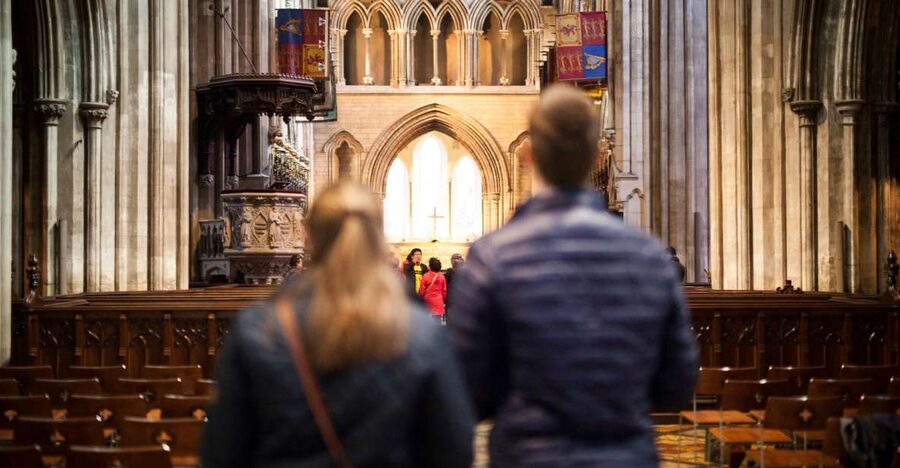
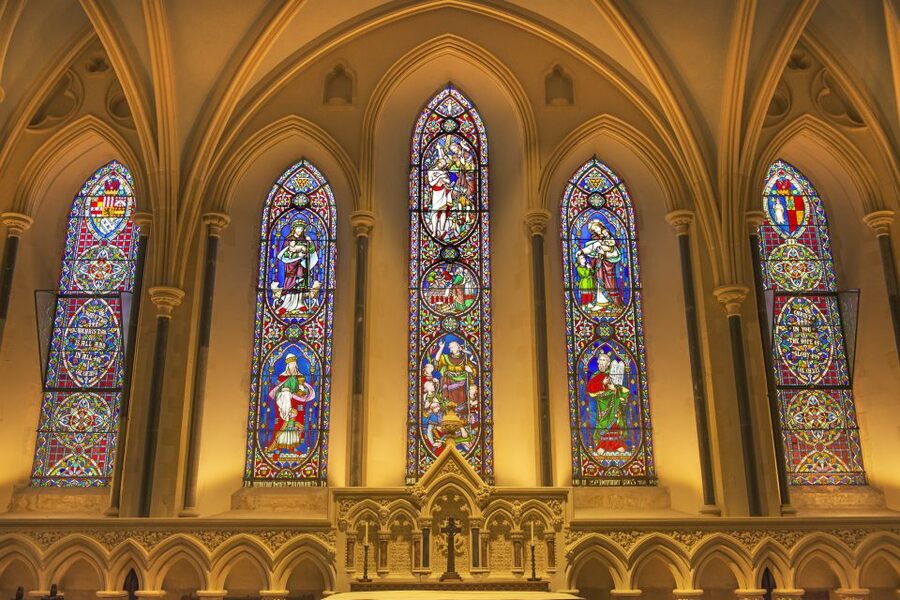
Give yourself time to look up. The cathedral’s Gothic architecture draws your eye toward the height and shape of the building, while the stonework and stained glass reward a slower look. The scale can be striking, but the details are what make the interior worth lingering over.
One window tells the life of Saint Patrick in 39 images. Rather than treating the glass as decoration in the background, use the audio guide to help you connect its scenes to the cathedral’s purpose and the saint’s place in Irish tradition. The many images also give you something concrete to follow, especially if you are visiting with children or prefer visual storytelling to long blocks of text.
The cathedral contains more than one layer of history and meaning. Its place in Irish life has reached across backgrounds and generations, and its role as a working church remains visible alongside its visitor displays. I would not expect every object or period to explain itself at a glance, so the audio guide is useful for making sense of what you are seeing.
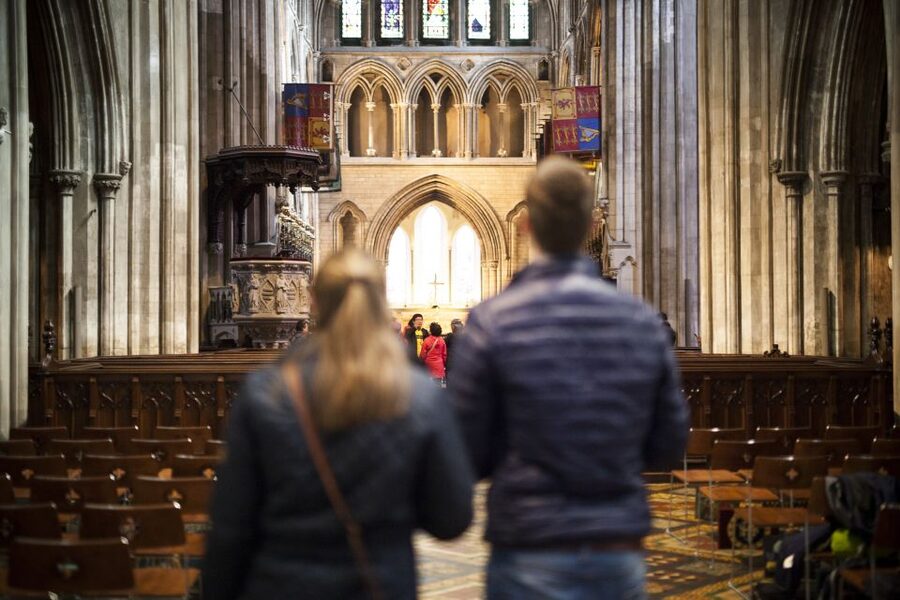
The space can draw a crowd, particularly around the most eye-catching features. If you arrive when it is busy, step aside when you want to listen or study a window rather than trying to keep pace with others. The visit is self-guided, which gives you the freedom to return to a detail once the immediate crowd has moved on.
Finding Jonathan Swift in the cathedral

One of the visit’s most personal stops is the memorial and collection of artifacts associated with Jonathan Swift. Swift wrote Gulliver’s Travels and served as dean of Saint Patrick’s from 1713 to 1745. His connection to the cathedral brings literary history into a building more often approached through its architecture and religious role.
Look for his burial place and take a moment to consider the unusual overlap between his public work and his church position. Swift’s memorial is not just a famous name tucked into a historic interior. It points to the people who shaped the cathedral’s life and gives you a specific figure through whom to understand one period of its past.
If you are familiar with Gulliver’s Travels, this may be the point where the visit feels especially grounded. If you have not read it, the audio guide and artifacts still give you a reason to pause. The setting makes Swift’s role as dean more than a line in a biography: this was the institution where he worked for more than three decades.
The Door of Reconciliation and a phrase with a past
The Door of Reconciliation is a small feature with a story that reaches beyond the cathedral walls. It is linked to the expression chance your arm, which gives the door a place in Irish language and folklore as well as in the building’s physical history.
This is an easy detail to pass if you focus only on the grand architecture, so keep it on your mental checklist. It offers a change of scale: instead of a lofty window or broad interior, you are looking at one feature and the story attached to it. That is part of the appeal of a self-guided visit. You can stop where your curiosity catches and spend as long as you like.
The anecdote also makes a useful bridge between the cathedral and the wider culture. You are not just collecting dates and names; you are seeing how a place can leave traces in the words people use. The audio guide helps set the detail in context, but the door itself is worth seeking out.
More guided tours in Dublin:
- Dublin Highlights and Hidden Gems Guided Walking Tour
★ 5.0 · 6,020 reviews - Dublin to Glendalough, Wicklow and Kilkenny Full Day Guided Tour
★ 5.0 · 4,895 reviews - Dublin Book of Kells, Castle and Molly Malone Statue Guided Tour
★ 4.5 · 3,825 reviews - The Little Museum of Dublin Famous Guided Tour
★ 5.0 · 2,948 reviews
The Discovery Space adds a hands-on pause
The Discovery Space gives the visit a different rhythm. Interactive touch screens help explain the cathedral’s long past, while iPads play samples of the choir. There is also an opportunity to make a brass rubbing, a simple activity that can turn a quiet architectural visit into something more hands-on.
I like this stop because it gives you a way to engage with the building beyond looking and listening. The screens can help when a visual detail raises a question, and the choir samples let you hear a part of the cathedral’s life that is not always on display. The brass-rubbing activity is especially useful if you are visiting with a younger companion or want a tangible break between history stops.
The Discovery Space is an addition to the visit, not a substitute for the cathedral itself. Allow time for both. If you hurry straight through the main interior, you may miss the details that make the building memorable; if you stay only in the main space, you lose the chance to explore its interactive side.
Choosing audio, a live guide or your own pace

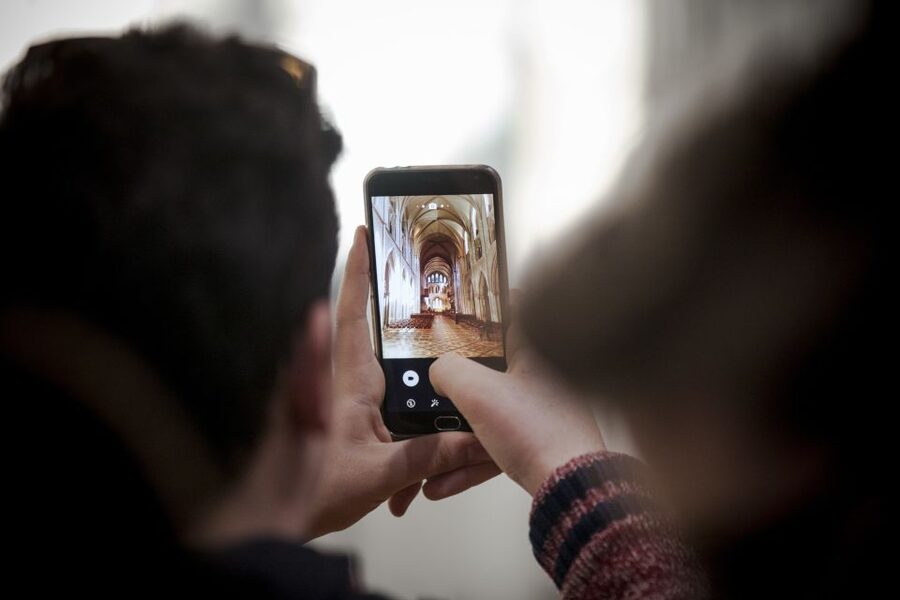
The included audio guide is available in six languages: English, French, German, Italian, Spanish and Irish. It is designed for a self-guided visit, so you can listen to the sections that interest you, move on when you are ready, and revisit a feature without having to keep up with a group.
Bring your own headphones if you prefer them. Some visitors find personal headphones or a phone connection easier to use than the supplied listening equipment, while others are happy with the handheld guide. Either way, the main advantage is flexibility: you can choose how much explanation you want and when to pause.
Live guided tours may also be available on site, with tours reported to run about every 15 minutes. Availability and timing can vary, so check when you arrive rather than building your whole visit around a particular departure. Guides including Anna and David have led tours here; if a live tour is running, it can be a good choice if you prefer a person to answer questions and point out features as you go.
There is no need to treat the audio and live tour as competing choices. If a guided departure does not fit your timing, the audio guide gives you a dependable alternative. If you do join a live tour, you can still return to features that deserve a second look afterward.
How much time to set aside, and what $12 buys
The admission is valid for one day, but no fixed visit length is specified. Your time will depend on how much of the audio you hear, how long you spend at the stained glass and Swift memorial, and whether you try the Discovery Space. This is a place where rushing through the interior would undercut much of what the ticket is for.
At $12 per person, the value rests on more than entry to a beautiful building. You also get an audio guide, access to the interactive displays and the chance to explore a major Irish church at your own pace. If you enjoy architecture, literature, religious history or cultural details such as the Door of Reconciliation, there is enough variety to make the price feel worthwhile.
For a quick look at the interior alone, the value may feel less compelling. The best return comes from giving the visit time: listen to selected audio stops, search out the specific features that interest you, and take a pause in the Discovery Space. The ticket is flexible, but the building rewards attention.
You can cancel up to 24 hours in advance for a full refund, and the booking option allows you to reserve without paying immediately. The cathedral is wheelchair accessible. Anyone under 18 must be accompanied by a parent or guardian.
Who should visit Saint Patrick’s Cathedral?
I would recommend this visit to anyone who wants to connect Dublin’s architecture with its religious and literary past. The cathedral suits visitors who like to set their own pace, since you can choose how much audio to hear and which details deserve a closer look. It is also a strong option if you want a cultural stop that does not depend on a long, fixed tour.
Families may appreciate the Discovery Space and brass rubbing, while readers of Swift have a clear reason to seek out his memorial. People drawn to stained glass should make a point of finding the 39-image window devoted to Saint Patrick. Even if you have visited many churches, the combination of active worship, public history and interactive interpretation gives this one several angles.
The main drawback is that the experience can feel crowded at popular times. That does not necessarily spoil the visit, but it can make the interior less serene and listening to the audio less comfortable. If quiet matters to you, consider visiting at a less busy time if your schedule allows, and be ready to linger or move on depending on the room’s flow.
Should you book?
Book Saint Patrick’s Cathedral if you want more than a quick architectural photo stop. Its Gothic interior, Swift memorial, stained glass and interactive Discovery Space make a satisfying self-guided visit, especially at $12 with the audio guide included. If you prefer live explanation, ask about guided tours when you arrive; otherwise, the audio lets you explore without a fixed schedule. Give the building enough time to tell its stories.
FAQ
What is included with admission?
Admission is self-guided and includes an audio guide. The guide is available in English, French, German, Italian, Spanish and Irish.
How much does admission cost?
The listed price is $12 per person.
How long is the ticket valid?
Admission is valid for one day. The visit itself does not have a stated duration.
Can I take a guided tour instead of using the audio guide?
Live guided tours may be available at the cathedral, with tours reported to run about every 15 minutes. Check on arrival for current availability. The audio guide is included with admission.
Is Saint Patrick’s Cathedral wheelchair accessible?
Yes, the cathedral is listed as wheelchair accessible.
Can I cancel my booking?
Yes. You can cancel up to 24 hours in advance for a full refund.
Can children visit on their own?
No. Anyone under 18 must be accompanied by a parent or guardian.
Recently reviewed in Dublin
- Private Dublin Treasure Hunt Self Guided Tour★ 4.5 · 14 reviews
- Banbridge: Game of Thrones Studio Entry & Tea with Transfers★ 4.8 · 56 reviews
- Dublin Ghost Hunt Exploration Game and Tour★ 4.0 · 34 reviews
- Digby Lock Cruise – Explore Ireland’s Historic Grand Canal.★ 5.0 · 66 reviews
- Drinks on Foot: Dublin Traditional Pub Tour★ 5.0 · 62 reviews
- Dublin Street Art Walking Tour★ 5.0 · 68 reviews
- Dublin Jewellery Forge a Hammered Silver ring:Georges Street★ 5.0 · 59 reviews
- Full-day Award Winning Private Dublin City Highlights Tour★ 4.5 · 62 reviews
Dublin Tours, compared.

Dublin to Cliffs of Moher, including Wild Atlantic Way and Galway
Read our review →
Cliffs of Moher, Burren & Galway City Day Tour
Read our review →

Dublin to Cliffs of Moher, Burren, Wild Atlantic Way, Galway Tour
Read our review →
Giants Causeway, Dark Hedges, Dunluce & Belfast Tour
Read our review →
Dublin to Belfast Black Cab, Dunluce Castle and Giant’s Causeway
Read our review →
Kilkenny, Wicklow Mountains & Glendalough Day Tour from Dublin
Read our review →