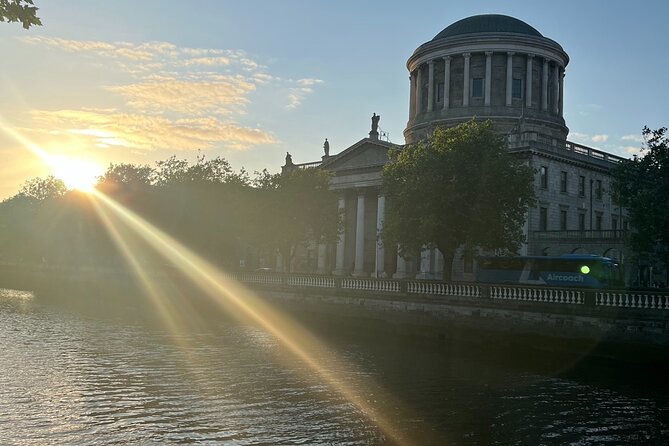
Reviewed · DUBLIN TOURS
Dublin Mythology and Folklore Tour with Irish Stories and Legends
Dublin’s myths make more sense when you see how they connect to the city’s streets, landmarks, and national story. This two-hour walking tour sets out from Temple Bar, crosses the Liffey, and ends at the Garden of Remembrance, using familiar places to tell tales of folklore, history, and Irish identity.
I like two things in particular: the guide links old legends to modern Ireland, and the route crosses the river instead of staying on the south side. Guides such as Helena, Deidre, Ross, Dave, Emily, Lee, and Alan bring different personalities to the storytelling, with humor and questions welcomed along the way.
The main consideration is that this is a walking and standing tour, not a seated talk. The pace is manageable for many people, but two hours on your feet can feel long, and one person found it hard to hear in a larger group.
What makes this walk worth your time

- Folklore with a place in the city: Hear stories tied to Dublin’s landmarks, rather than treating myths as a separate subject.
- A route across the Liffey: See sites on both sides of the river and finish north of the center.
- Six central stops: The route includes Temple Bar, Grattan Bridge, St. Michan’s Church, the GPO, and the Garden of Remembrance.
- History alongside legends: The tour connects Irish stories with the country’s past and present identity.
- A group capped at 25: This is a group experience, though a full group may make it harder to hear.
- About two hours outdoors: Wear comfortable shoes and be ready to stand during the storytelling.
My take on the tour’s mix of myth and history
This is not a tour built around entering a string of attractions. Its value is in the guide’s stories and the connections made between place, legend, and Irish history. You move through central Dublin while hearing how folklore has shaped the way people understand the country and its culture.
That combination gives the walk more range than a straight mythology lesson. The stories include fairies, leprechauns, and invasions, but the discussion also reaches into Ireland’s often difficult history and modern identity. One guide even connected Irish mythology with the origins of the Hulk, a surprising pop-culture turn that hints at how far these old stories can travel.
The best guides make this material lively without reducing it to a string of punchlines. Helena is praised for humor, warmth, and including the group; Ross for his gift for storytelling; and Deidre for linking folklore and history with enthusiasm. Dave, Emily, Lee, and Alan are also named as engaging guides who answer questions and give the walk a personal feel.
You should expect the guide to do much of the work. The buildings and streets help give the stories a setting, but this is not a tour where every stop offers an interior visit or a long look at a monument. You are there to listen, ask questions, and see the city through a different lens.
More Dublin tours:
- Dublin to Cliffs of Moher, including Wild Atlantic Way and Galway
★ 5.0 · 23,331 reviews - From Dublin: Cliffs of Moher, Burren & Galway City Day Tour
★ 4.8 · 18,888 reviews - Dublin: Guinness Storehouse Entry Ticket
★ 4.6 · 16,863 reviews
Starting among Temple Bar’s lanes
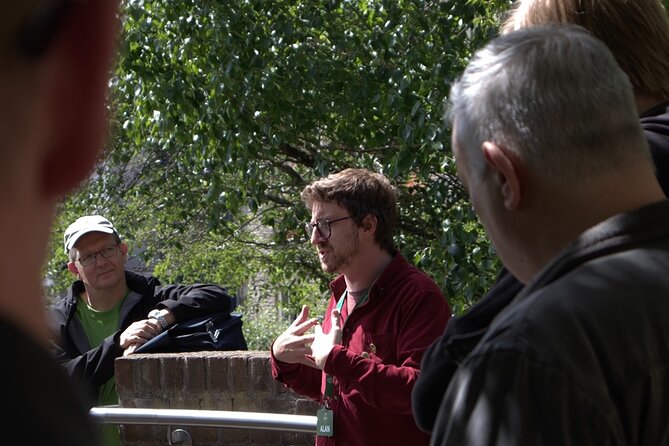
The walk begins at 3 Crown Alley, in the center of Temple Bar. You pass through much of this well-known district on the way toward Grattan Bridge, so the opening gives you a quick orientation in an area many people already plan to visit.
Temple Bar is a useful place to start because the tour moves quickly from the busy central streets into a wider story about Dublin. The guide sets the tone with folklore and local history, rather than asking you to treat the neighborhood as a collection of pubs and photo stops.
The first listed stop is brief, around 10 minutes. Think of it as a storytelling pause, not a deep exploration of every lane. If Temple Bar is new to you, the walk also helps you get your bearings before heading farther north.
Following the stories across the Liffey
The route explores sites both north and south of the River Liffey, then crosses at Grattan Bridge. That change of side matters: the tour is not just a loop through the familiar south-central streets, and the finish at Parnell Square gives the route a clear destination.
The river stop is listed at about 10 minutes. Here, the focus is on Dublin’s best-known waterway and the places clustered around it. The value lies less in a formal riverfront visit than in using the Liffey as a thread through the city’s geography and stories.
Grattan Bridge is one of the city’s favored crossings. Its ornate lamps, decorated with seahorses, make it a memorable detail to look for as you cross between Parliament Street and Capel Street. It is a small but useful reminder that even a practical crossing can carry a sense of Dublin’s character.
A few people appreciate that the walk crosses the river and ends on the north side. It changes the feel of the outing and lets you see more than one slice of central Dublin. Keep in mind, though, that moving between stops means this is a real city walk, not six stationary storytelling sessions.
At St. Michan’s and the old justice quarter
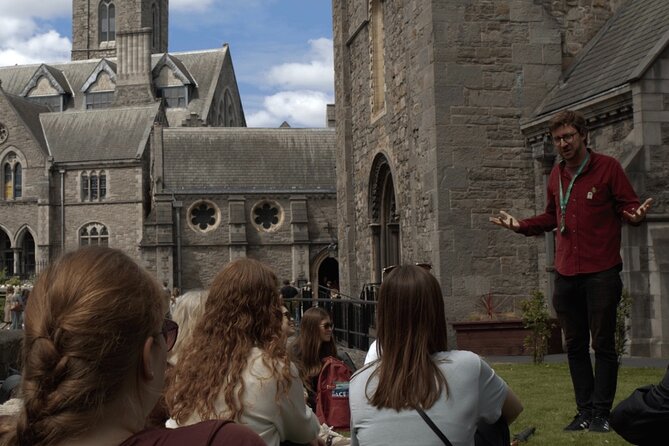
Outside St. Michan’s Church, the guide talks about the church’s place in Dublin’s secret tales and the bodies held in its crypt. The stop is also a chance to hear about the nearby grounds of the old Newgate Prison and Green Street Courthouse, a less obvious corner of the city with a role in Irish history.
The emphasis here is on stories and context from outside the buildings. The tour description places the group outside St. Michan’s, so do not book expecting entry to the church or its crypt as part of this walk. The stop is listed at around 10 minutes, which makes the guide’s account central to understanding why the area matters.
I like this section for the way it brings folklore close to real events and institutions. A church, prison grounds, and courthouse make a fitting setting for tales shaped by death, punishment, and memory. The contrast helps show how Irish storytelling can be entertaining while still touching on serious parts of the country’s past.
Or try something different:
- Dublin to Cliffs of Moher, Burren, Wild Atlantic Way, Galway Tour
★ 5.0 · 12,924 reviews - Dublin: Giants Causeway, Dark Hedges, Dunluce & Belfast Tour
★ 4.8 · 8,843 reviews - Dublin to Belfast Black Cab, Dunluce Castle and Giant’s Causeway
★ 5.0 · 7,954 reviews - Kilkenny, Wicklow Mountains & Glendalough Day Tour from Dublin
★ 5.0 · 7,897 reviews
Connecting the GPO to Irish identity
The next stop is outside the General Post Office, a striking facade and a building with major importance in Irish history. The guide uses the GPO to explain how mythology plays a part in shaping modern Irish history.
That is a useful turn in the tour. Instead of treating folklore as something safely tucked away in the distant past, the discussion asks how stories help a country describe itself. If you want a walk that is more than a collection of supernatural tales, this connection is one of its strongest reasons to book.
The GPO stop is also listed at around 10 minutes, and the visit is outside. You will not need to budget for an admission ticket at the stops described on the route. The experience is about looking, listening, and linking the building to the wider story the guide is telling.
Ending at the Garden of Remembrance

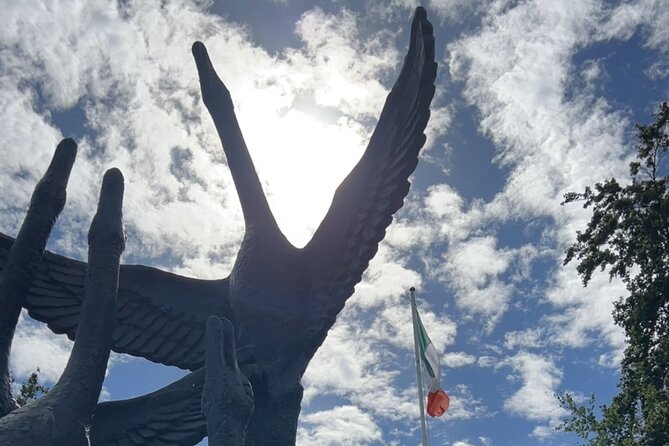
The walk finishes at the Garden of Remembrance in Parnell Square, at the foot of Oisin Kelly’s Children of Sir statue. Ending here gives the tour a quieter, more reflective close after the movement and storytelling of the city center.
The statue and garden provide a final point for considering how folklore and national memory sit alongside each other. The finish also leaves you on the north side of central Dublin, rather than returning you to Temple Bar. Factor that into any plans you make afterward.
The route lists six stops, each with a short time allocation, but the full experience lasts about two hours. The rest of the time is taken up by walking and the guide’s storytelling between locations. One guide is described as a fast walker, while another tour group found the pace tolerant of slower walkers. Your experience may depend on the guide and group, so mention any mobility concern before setting out.
How the group size and pace affect the experience
The maximum group size is 25. That cap keeps the tour from becoming a large coach-style outing, but it is not the same as a private or very small group. One person found the guide difficult to hear when the group felt too large, so position yourself near the guide and ask if you miss a detail.
The walk includes periods of standing as well as travel between stops. Several people found it manageable, and one described it as not too much walking, but another found the time on their feet tiring. If standing for long stretches is difficult for you, consider whether an outdoor walking format suits you better than an indoor talk.
The tour is listed as wheelchair and stroller accessible, and service animals are allowed. Most people can participate, and the meeting point is near public transportation. Those details make it easier to fit into a Dublin visit, though you should still consider the route’s walking and standing before booking.
Getting good value for $29.02
At $29.02 per person, the price buys a two-hour guided walk through central Dublin, with interpretation at six locations and no admission ticket required for the listed stops. You are paying chiefly for the guide’s storytelling and knowledge, not for access to attractions or a long set of indoor visits.
That can be good value if you enjoy stories and want context for the streets you are already exploring. The tour offers a compact way to link landmarks with folklore, history, and national identity. It can also be a useful early activity: one person found it a good way to begin a Dublin visit and get a feel for the city.
Value depends on what you want from a tour. If you prefer a guide-led walk with room for questions, humor, and connections between subjects, the format makes sense. If you want to sit down, enter historic buildings, or spend a long time examining each site, this is not the right use of your money.
The tour is commonly booked about 24 days ahead, so it is worth planning early if you have a fixed date in mind. Booking confirmation is received at the time of booking. Free cancellation is available up to 24 hours before the start time; changes or cancellations inside that window are not accepted for a refund.
Who should book this Dublin folklore walk
I would put this tour high on the list for anyone who likes mythology, storytelling, or the ways a country’s past shapes its present. It is especially useful if you want a guided orientation that mixes Dublin landmarks with Irish culture, rather than a tour devoted only to architecture or dates.
It also suits curious travelers who enjoy asking questions. The guides are described as willing to respond to questions, and the strongest accounts combine humor with clear explanations. The stories can make familiar buildings feel less like scenery and more like part of a larger national conversation.
It is a less natural fit if you tire easily while standing, need a very small group to hear well, or prefer an indoor activity. One person had to leave after a late start because of another appointment, so avoid placing a tight commitment immediately afterward. Give yourself breathing room on either side.
Should you book it?
Book the Dublin Mythology and Folklore Tour if you want a lively two-hour walk that joins Irish legends to real places and history. The crossing of the Liffey, the stop at St. Michan’s, and the GPO discussion give the route a good spread, while the Garden of Remembrance offers a thoughtful finish.
Skip it if your priority is indoor access, a seated performance, or a slow, close study of each landmark. For most people who enjoy a good story and can manage two hours on foot, the price is fair and the subject matter offers a fresh way to read central Dublin.
FAQ
How long does the tour take?
Plan on about two hours. The route includes walking between stops as well as time for stories at each location.
Where does the tour start and finish?
It starts at 3 Crown Alley in Temple Bar and finishes at the Garden of Remembrance in Parnell Square, beside Oisin Kelly’s Children of Sir statue.
What places are included on the route?
The six listed stops are Temple Bar, the River Liffey, Grattan Bridge, St. Michan’s Church, the GPO, and the Garden of Remembrance.
Is the tour wheelchair and stroller accessible?
Yes. The tour is listed as wheelchair and stroller accessible.
How large can the group be?
The maximum group size is 25 people.
Is the tour offered in English?
Yes. The tour is offered in English.
Can I cancel for a refund?
You can cancel for a full refund at least 24 hours before the experience’s start time. Cancellations or changes made less than 24 hours beforehand are not accepted for a refund.
Recently reviewed in Dublin
- Private Dublin Treasure Hunt Self Guided Tour★ 4.5 · 14 reviews
- Banbridge: Game of Thrones Studio Entry & Tea with Transfers★ 4.8 · 56 reviews
- Dublin Ghost Hunt Exploration Game and Tour★ 4.0 · 34 reviews
- Dublin: Walking Tour for Foodies with Tastings★ 4.8 · 65 reviews
- 2 Hour Walking Tour of Dublin’s City Centre★ 5.0 · 63 reviews
- 4-Day Blarney Castle, Ring of Kerry, Cliffs of Moher & Connemara★ 4.5 · 60 reviews
- Cliffs of Moher & Galway Bay private tour or Galway city day trip★ 5.0 · 62 reviews
- Kerry Highlights Day Tour from Dublin★ 3.5 · 64 reviews
Dublin Tours, compared.

Dublin to Cliffs of Moher, including Wild Atlantic Way and Galway
Read our review →
Cliffs of Moher, Burren & Galway City Day Tour
Read our review →
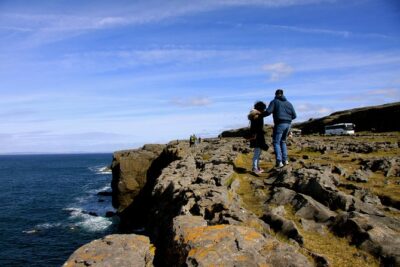
Dublin to Cliffs of Moher, Burren, Wild Atlantic Way, Galway Tour
Read our review →
Giants Causeway, Dark Hedges, Dunluce & Belfast Tour
Read our review →
Dublin to Belfast Black Cab, Dunluce Castle and Giant’s Causeway
Read our review →
Kilkenny, Wicklow Mountains & Glendalough Day Tour from Dublin
Read our review →