Reviewed · DUBLIN TOURS
6-Day All Ireland Tour from Dublin Including Accommodation
Ireland’s big sights are spread across the island, and this six-day trip links them without asking you to drive narrow country roads or plan a string of overnight stays. I like the chance to see Giant’s Causeway and the Cliffs of Moher on the same trip, and I like the mix of guided stops and free time in towns such as Galway and Dingle.
The trade-off is the pace: you cover a lot of ground, and some days involve long coach journeys with fixed return times at each stop. Your guide can make a big difference too. Danny, Gordon, Vincent and Brian are among the guides named by people who took the trip, but the guide and group size can vary.
The main points to weigh before booking
- Two coastlines in one week: The route takes in Northern Ireland’s Giant’s Causeway and the west coast’s Cliffs of Moher and Dingle Peninsula.
- Five nights are arranged for you: Accommodation, coach transport and breakfast are included, with a choice between mixed hostel dorms and private-room B&B accommodation.
- Expect early starts and a full schedule: Day one begins at 7:50 a.m. in Dublin, and several days combine multiple stops with hours on the road.
- Some headline activities cost extra: The Belfast Black Taxi tour and Killarney horse-and-cart ride or horseback ride are optional and paid separately.
- Your group may change: The stated maximum is 56, and some people have reported changing buses during the tour.
- Check the overnight details: The accommodation list names Derry, while the day-two description says the group reaches Letterkenny. Confirm the precise lodging location before you go.
Six days from Belfast to Blarney
This is a bus tour for seeing a broad sweep of Ireland in limited time, not a slow holiday based in one town. The itinerary crosses Northern Ireland and the Republic, pairing famous stops with smaller places such as Strandhill and Adare. Dublin is the start and finish, but the tour does not set aside time for Dublin sightseeing.
The advertised price is $1,087.65 per person. That covers five nights’ accommodation, coach transport, a guide, Wi-Fi and USB charging points on the coach, and listed admissions including Titanic Belfast, the Giant’s Causeway Visitor Centre, the Cliffs of Moher and Blarney Castle and Gardens. You still pay for most meals and drinks, plus the optional activities.
The price makes most sense if you value having the route, transport and beds arranged for you. You avoid renting a car, navigating unfamiliar roads and booking accommodation in several towns. It is less attractive if you prefer to linger, choose every stop yourself or spend most of your holiday in just one region.
Other good ways to see Dublin:
- Dublin to Cliffs of Moher, including Wild Atlantic Way and Galway
★ 5.0 · 23,331 reviews - From Dublin: Cliffs of Moher, Burren & Galway City Day Tour
★ 4.8 · 18,888 reviews - Dublin: Guinness Storehouse Entry Ticket
★ 4.6 · 16,863 reviews
Day one: Monasterboice and Titanic Belfast
The coach leaves Dublin at 7:50 a.m. from Paddy’s Palace, 5 Beresford Place, then heads north. Monasterboice, an early monastic settlement dating to 501, offers a first look at Ireland’s religious past. Its Celtic crosses and round tower are a striking change of scene from the city, though the visit is brief within a busy travel day.
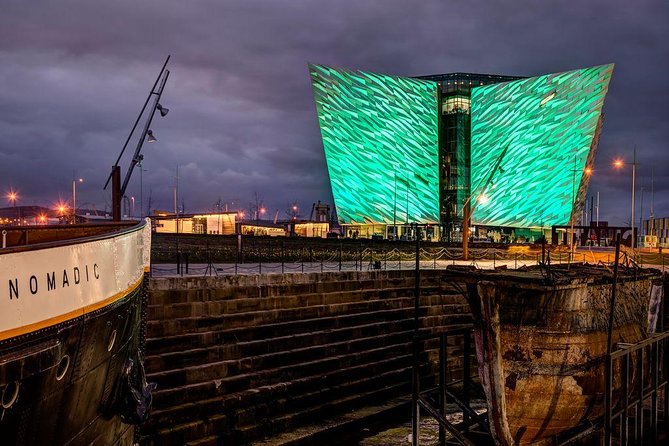
In Belfast, the included Titanic Belfast attraction traces the ship from its design and construction to its launch and sinking. Allow about two hours. The exhibition gives the city’s shipbuilding story a clear setting: this is where Titanic was built, not simply a stop chosen for the name.
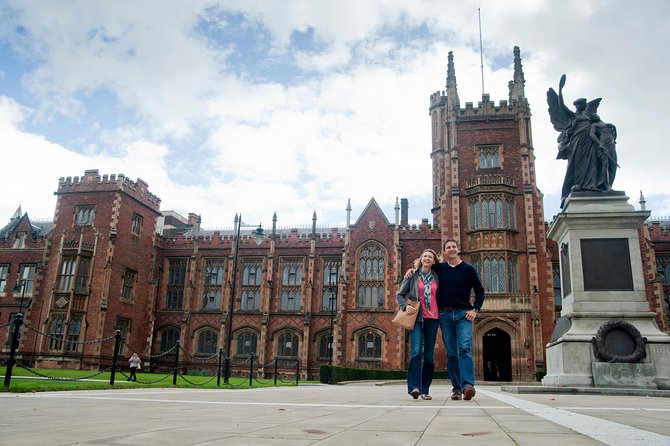
You can add a Black Taxi tour, arranged and paid for through the guide. It visits sites such as the Peace Wall and political murals, as well as city landmarks including City Hall and Queen’s University. This is a useful way to understand Belfast’s recent history and the divided communities behind the murals. It is optional, so budget for it separately if it interests you.
The tour spends the night in Belfast. One practical wrinkle: the tour begins at a central meeting point, not with hotel pickup. Some people have found the precise bus location confusing, so check your confirmation carefully and allow time to find the coach.
Day two: Dark Hedges, Giant’s Causeway and Derry
The north coast day brings several very different stops. The Dark Hedges, an avenue of beech trees planted in the eighteenth century, is a short photo stop. It became widely known as the King’s Road in Game of Thrones. It is atmospheric, but expect a quick visit rather than a long walk.
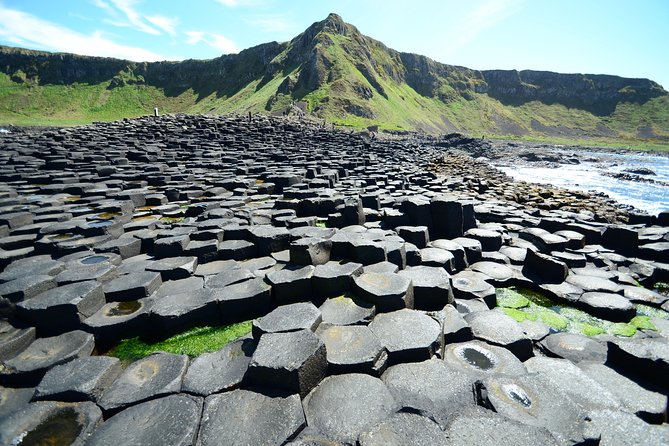
The main event is Giant’s Causeway, where thousands of hexagonal basalt columns meet the sea. Local legend credits the giant Fionn with building the causeway to reach Scotland. The admission listed includes the visitor centre, and the stones are about a ten-minute walk from there. A mobility bus is available for a small fare for people who find the path difficult.
You then visit Derry, with a guided walk along the city walls and through the Bogside district. The walls date to 1613; the Bogside carries the memory of the Troubles and the events associated with Bloody Sunday. This part of the day can be especially meaningful if you want context for Northern Ireland’s recent past. The emphasis on political history may feel heavy if you hoped for a broader mix of local stories, so it is worth knowing what kind of commentary you may encounter.
There is free time in Derry before the evening stop. The overnight location needs checking: the accommodation list names Derry, but the day description says the coach reaches Letterkenny. Don’t assume those are the same place when planning an evening or arranging onward travel.
Day three: the Wild Atlantic Way and Galway
The route west takes you along the Wild Atlantic Way, with a lunch stop in Strandhill, County Sligo. This coastal village is known for surfing, and a walk by the beach offers a welcome chance to stretch your legs. You have about an hour, so plan lunch simply rather than expecting a long seaside break.
The coach reaches Galway by mid-afternoon. You can join a free walking tour or explore independently, then spend the night in the city. Galway gives the trip a change of pace after several days of coach travel: there is time to find a meal, browse shops or take a walk without moving on to another sightseeing stop straight away.
Breakfast is listed for all six days, but one account of the tour noted that the first morning in Belfast did not include a hot breakfast. It is sensible to confirm what is provided at each overnight stop and keep a backup breakfast plan for an early start.
More Dublin tours:
- Dublin to Cliffs of Moher, Burren, Wild Atlantic Way, Galway Tour
★ 5.0 · 12,924 reviews - Dublin: Giants Causeway, Dark Hedges, Dunluce & Belfast Tour
★ 4.8 · 8,843 reviews - Dublin to Belfast Black Cab, Dunluce Castle and Giant’s Causeway
★ 5.0 · 7,954 reviews - Kilkenny, Wicklow Mountains & Glendalough Day Tour from Dublin
★ 5.0 · 7,897 reviews
Day four: the Burren, Doolin and the Cliffs of Moher
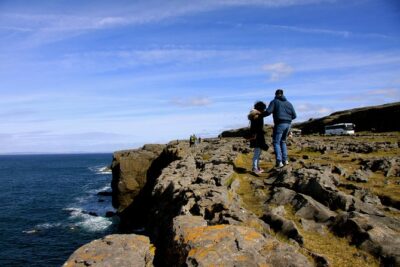
The west coast is the focus today. The Burren is a broad area of exposed limestone, with unusual plant life growing among the rock. The tour also uses the drive to discuss the Great Famine of 1845 to 1849 and its effects on Irish families and emigration. The Burren stop itself is short, so think of it as an introduction to the place rather than a long hike.
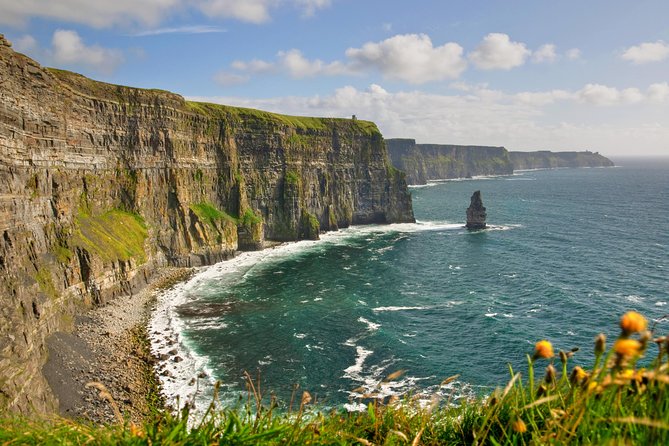
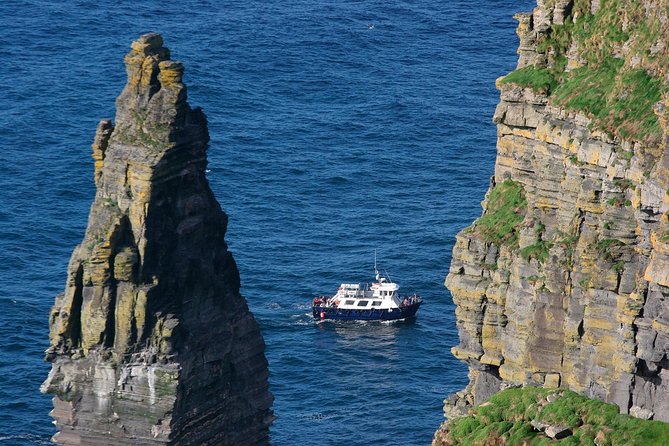
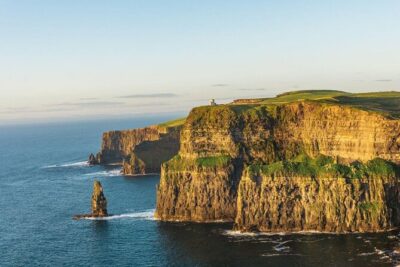
Doolin is the lunch stop before the Cliffs of Moher. The cliffs rise more than 700 feet above the Atlantic and are one of the trip’s most dramatic natural sights. You have about an hour and a half there, including time to walk and take in the views. Weather can change quickly on the coast, so pack a rain layer even if Dublin starts out dry.
The day continues across the River Shannon near Limerick, then pauses in Adare, known for its thatched cottages. It is a brief stop before the drive to the Dingle Peninsula, where you spend the night. The day combines several major sights with a long route, so the time at each place is necessarily limited.
Day five: Slea Head and Dingle
The Dingle Peninsula is a high point for many people who want open coastal views and a sense of Ireland’s Gaelic-speaking west. The route includes Inch Beach, then the town of Dingle, followed by a drive around Slea Head. From the peninsula, you may see the Blasket Islands, Sleeping Giant Island and beehive huts dating to around 2000 B.C.
The scenery is the reason to save energy for this day. The road follows the coast, with beaches and ocean views that make the coach journey part of the outing rather than just transport. Stops are scheduled, though, so you may not have time for a long walk at every viewpoint.
Dingle itself has time for browsing, a meal or a drink in one of its many pubs. The town is known for its traditional arts and crafts shops and music. The overnight accommodation is described as being on the rural Dingle Peninsula, which may not be in Dingle town itself. One account specifically notes a stay in Annascaul, about 18 kilometres away, so check where you will sleep if being within walking distance of Dingle matters to you.
Day six: Killarney National Park and Blarney Castle
The final day starts around Killarney. You can arrange a horse-and-cart ride or horseback ride through Killarney National Park, both optional and paid separately. These give you a different way to see the park, but you can also use the day for the scheduled drive and stops without adding an activity.
The route crosses the Cork and Kerry mountains to Blarney Castle. The included visit lasts about two hours, with time for the castle, gardens and the option to kiss the Blarney Stone. The grounds are part of the appeal, so you are not limited to the climb and the famous stone. Blarney Woolen Mills is nearby for last-minute souvenirs.
After lunch, the coach crosses the Golden Vale on the return to Dublin, arriving in the late afternoon. That leaves the evening open, but avoid booking an activity that depends on an exact arrival time. Traffic and the day’s schedule can affect when you get back.
Accommodation, coach travel and the guide
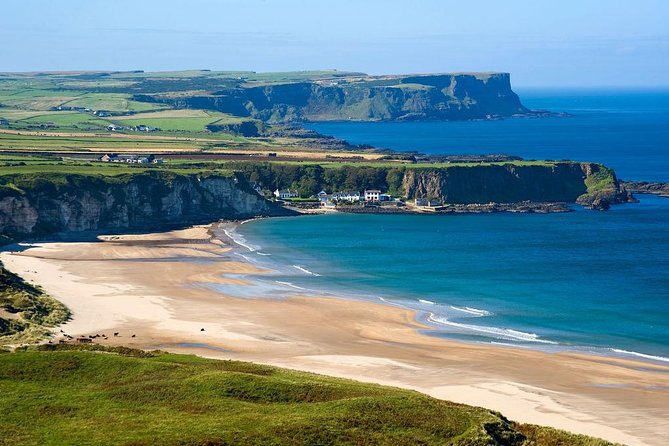
You choose between Backpacker and Economy accommodation. Backpacker means a bed in a small or medium mixed dormitory, with men and women sharing as is standard in many European hostels. Economy means a private room in a bed-and-breakfast property, with double, twin, triple or single room options. The rate is per person sharing for most room types, and solo travelers can choose the single-room rate.
The accommodation is a practical part of the value calculation. Several people have found the B&B or hotel option comfortable and clean, while others have had less appealing rooms, including a report of an outdated Killarney property with uncomfortable beds. Hostel rooms can be cramped, and hostel breakfasts may differ from what you expect. If a private room and a better night’s sleep matter to you, the Economy option is likely the safer fit, but it does not guarantee identical standards at each stop.
The air-conditioned coach has Wi-Fi and USB charging points at every seat. The group limit is 56, but actual group size can vary, and some people have described changing buses or guides along the way. The tour follows a set route, and stop times matter. Keep an eye on your return time: one account warns that the group may leave if you are more than 15 minutes late.
The guide is a big part of the experience because so much of the week is spent on the road. Danny is named repeatedly for storytelling, humor and clear instructions; Gordon, Vincent and Brian are also mentioned as guides who helped make trips enjoyable. You cannot select a particular guide, and commentary style varies. If you want plenty of historical detail, listen actively and ask questions when there is time.
Who gets good value from this trip?
I would choose this tour if you have less than a week, want to see both Northern Ireland and the west and south of the island, and would rather leave the driving to someone else. It can also suit solo visitors who want company and prearranged lodging. Several people traveling alone have found the group format reassuring and the Economy single option comfortable.
It is not the best fit if you dislike early starts, long drives or a schedule that limits time at each stop. The itinerary is fixed, and the operator does not adjust the route to individual requests. If you prefer quiet evenings, check the exact overnight locations and accommodation type. If you need flexible cancellation, note that this booking is non-refundable and cannot be changed.
Should you book the six-day Ireland tour?
Book it if your priority is seeing a wide range of Ireland’s headline sights without renting a car or arranging five nights of lodging yourself. The combination of Giant’s Causeway, Derry, Galway, the Cliffs of Moher, Dingle and Blarney is strong value for a short visit, especially with several admissions included.
Before paying, confirm the pickup point, room type, overnight location on day two and what breakfast means at each stop. Choose Economy if privacy and sleep matter more than saving money, and leave room in your budget for meals and optional rides. If you want a slow, flexible holiday, build your own route instead. If you want a fast, guided introduction to Ireland, this is a practical way to cover a lot of ground.
FAQ
Where does the tour start and finish?
It starts at Paddy’s Palace, 5 Beresford Place, Gardiner Street Lower, Dublin 1, with a stated start time of 7:50 a.m. The tour ends back at the meeting point in Dublin.
How many nights of accommodation are included?
Five nights are included. The accommodation options are listed as Belfast, Derry, Galway, the Dingle Peninsula and Killarney.
Is breakfast included?
Breakfast is listed as included for six days. One account notes that the first Belfast morning did not include a hot breakfast, so confirm what is provided at each stop.
Which accommodation options can I choose?
You can choose Backpacker, which is a bed in a mixed hostel dorm, or Economy, which offers a private room in a bed-and-breakfast property. Economy room configurations include double, twin, triple or single.
Are meals included?
Food and drinks are not included unless specified. Breakfast is included, but you should budget separately for lunches, dinners and drinks.
Are the Black Taxi tour and Killarney rides included?
No. The Belfast Black Taxi tour and the Killarney horse-and-cart ride or horseback ride are optional and paid separately through the guide.
Which admissions are included?
The tour details list admission to Titanic Belfast, the Giant’s Causeway Visitor Centre, the Cliffs of Moher and Blarney Castle and Gardens as included.
How large can the tour group be?
The stated maximum is 56 people. Actual group sizes and coach arrangements may vary.
Can I cancel or change my booking?
No. The booking is non-refundable and cannot be changed for any reason.
Recently reviewed in Dublin
- Private Dublin Treasure Hunt Self Guided Tour★ 4.5 · 14 reviews
- Banbridge: Game of Thrones Studio Entry & Tea with Transfers★ 4.8 · 56 reviews
- Dublin Ghost Hunt Exploration Game and Tour★ 4.0 · 34 reviews
- Cliffs of Moher & Galway Bay private tour or Galway city day trip★ 5.0 · 62 reviews
- Kerry Highlights Day Tour from Dublin★ 3.5 · 64 reviews
- Day Tour from Dublin: Wicklow Mountains, Glendalough, Powerscourt★ 5.0 · 59 reviews
- Digby Lock Cruise – Explore Ireland’s Historic Grand Canal.★ 5.0 · 66 reviews
- Drinks on Foot: Dublin Traditional Pub Tour★ 5.0 · 62 reviews
Dublin Tours, compared.
Dublin to Cliffs of Moher, including Wild Atlantic Way and Galway
Read our review →
Cliffs of Moher, Burren & Galway City Day Tour
Read our review →
Dublin to Cliffs of Moher, Burren, Wild Atlantic Way, Galway Tour
Read our review →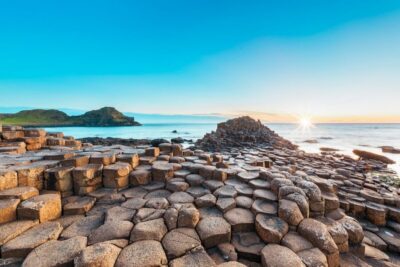
Giants Causeway, Dark Hedges, Dunluce & Belfast Tour
Read our review →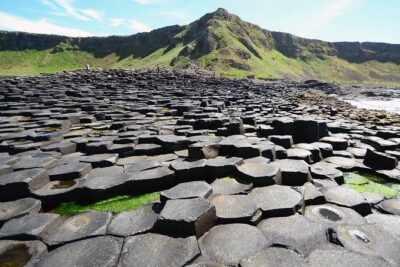
Dublin to Belfast Black Cab, Dunluce Castle and Giant’s Causeway
Read our review →
Kilkenny, Wicklow Mountains & Glendalough Day Tour from Dublin
Read our review →